Introduction
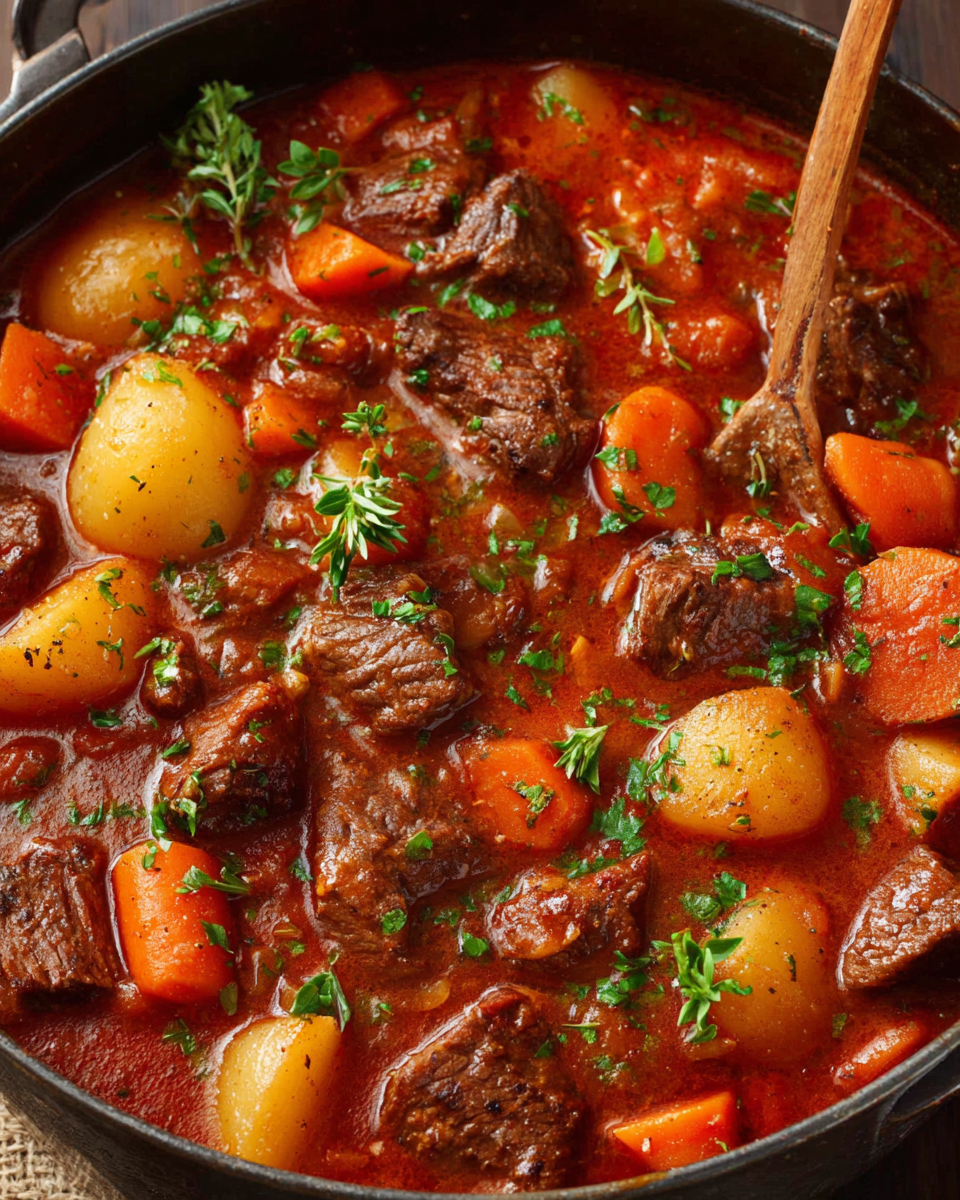
Beef stew is a cherished dish that has stood the test of time, providing warmth and comfort on a chilly day. Its rich flavors and hearty textures make it a favorite in many households. The process of slow-cooking tender beef and vegetables melds their natural flavors, creating a dish that is both satisfying and nutritious.
This traditional recipe celebrates the simplicity and richness of classic ingredients, allowing home cooks to create a delightful meal that warms both the body and soul. Each component plays a vital role in developing the deep, complex flavors that make this stew unforgettable.
Ingredients
- 2 pounds beef chuck, cut into 1-inch pieces
Beef chuck is a well-marbled cut that becomes tender when braised. It has a rich flavor, making it ideal for stews where it can absorb the braising liquid. - 3 tablespoons vegetable oil
Oil is essential for browning the beef, which enhances its flavor and creates a fond (the tasty bits stuck to the bottom of the pot) that will enrich the stew. - 1 large onion, chopped
Onions add sweetness and depth to the dish. When sautéed, they release their sugars, enhancing the overall flavor profile of the stew. - 3 cloves garlic, minced
Garlic imparts a pungent aroma and flavor, brightening the stew and complementing the richness of the beef. - 4 cups beef broth
Beef broth serves as the primary liquid for the stew, infusing it with savory flavors and ensuring the ingredients are tender during cooking. - 2 large carrots, peeled and sliced
Carrots add sweetness and a vibrant color to the stew, balancing the flavors while also providing a lovely texture. - 2 stalks celery, sliced
Celery contributes a subtle earthiness and crunch, enhancing the overall complexity of the dish. - 2 medium potatoes, peeled and cubed
Potatoes add heartiness and help thicken the gravy, making the stew more filling and satisfying. - 1 teaspoon dried thyme
Thyme is a classic herb for savory dishes, adding a fragrant note that complements the beef and vegetables beautifully. - 1 bay leaf
A bay leaf infuses the stew with its unique aroma, contributing layers of flavor that develop during the slow cooking process. - Salt and pepper, to taste
Seasoning is crucial to enhance the flavors of the dish. Adjusting salt and pepper at the end will help achieve the perfect balance.
Directions & Preparation
Step 1: Heat the vegetable oil in a large pot over medium-high heat.
Heating the oil properly is crucial for browning the beef. A hot pot ensures the beef sears right, locking in its juices and flavor. This process builds the foundation of rich flavors as the fond develops.
Step 2: Add the beef chuck to the pot in a single layer and brown it on all sides.
Browning the beef not only enhances its flavor through caramelization but also creates those flavorful bits stuck to the bottom of the pot that will enrich your stew. Don’t overcrowd the pot, as this could lead to steaming rather than browning.
Step 3: Remove the browned beef and set it aside on a plate.
Setting aside the beef allows you to sauté the vegetables in the remaining fat without overcrowding. This step ensures the fond developed during browning is incorporated into the stew for deeper flavor.
Step 4: In the same pot, add the chopped onion and cook until softened, about 5 minutes.
Cooking the onions until soft releases their natural sugars, adding sweetness and depth. This step builds the aromatic base for your stew, essential for achieving rich flavors.
Step 5: Stir in the minced garlic and cook for an additional minute, until fragrant.
Garlic's flavor becomes more intense as it cooks, and adding it after the onions allows its aromatic qualities to shine without burning. It adds a fresh, pungent quality to the dish.
Step 6: Return the browned beef to the pot and add the beef broth, carrots, celery, potatoes, thyme, and bay leaf.
This step assembles all the elements of your stew, allowing the flavors to meld together. The broth infuses the beef and vegetables with savory goodness as they slowly simmer.
Step 7: Bring the mixture to a boil, then reduce heat to low and cover the pot.
Bringing it to a boil initially helps develop flavor with the browned bits, but reducing it to a simmer allows slower cooking. This is vital for tenderizing the beef and developing the sauce.
Step 8: Simmer for 1.5 to 2 hours, stirring occasionally, until the beef is tender.
Slow cooking allows the connective tissues in the beef to break down, resulting in tender meat. Stirring occasionally ensures even cooking and prevents sticking.
Step 9: Remove the bay leaf and adjust seasoning with salt and pepper to taste.
This final adjustment is key for a well-rounded dish. The stew will likely need some salt to bring out the flavors of the ingredients, so taste and adjust as necessary.
Step 10: Serve hot with crusty bread or over rice for a comforting meal.
Serving the stew with bread helps soak up the delicious gravy, and pairing it with rice provides a nice balance of textures. Presentation enhances the enjoyment of this hearty dish.

Discovering the Flavor of Beef Broth
Beef broth forms the liquid backbone of traditional beef stew, infusing the dish with a deep, umami-rich flavor. The quality of your broth can significantly impact the final taste, so consider using homemade broth if possible. Commercial varieties can vary greatly, so choosing a low-sodium option allows for better control over seasoning, ensuring a well-balanced stew.
The Role of Vegetables in Stew
The vegetables in beef stew are not just fillers; they are vital for texture and flavor complexity. Carrots and celery add sweetness and earthiness, while potatoes create heartiness that makes the dish satisfying. As they simmer, the vegetables break down slightly, releasing their flavors into the broth, creating a beautifully balanced flavor profile that complements the beef.
Why Browning the Beef Matters
Browning the beef at the beginning of the cooking process is crucial for flavor development. This step creates a caramelized crust which enhances the overall taste and forms the all-important fond at the bottom of the pot. This fond not only deepens the flavor but also enriches the sauce as it cooks, contributing to the stew's complexity.
FAQs
How can I make my beef stew less thick?
If your stew is too thick, simply add more beef broth or water to reach your desired consistency. Stir well and adjust the seasoning afterward.
What can I do if my stew is bland?
If your stew tastes bland, try adding more salt, pepper, or umami-rich ingredients like Worcestershire sauce or soy sauce to boost the flavor.
Can I use different types of meat in this stew?
Yes, while beef chuck is traditional, you can use other cuts like brisket or even lamb for a twist. Just be mindful of cooking times, as some meats may require adjustments.
What if my potatoes fall apart too much?
If your potatoes become mushy, it might be due to overcooking. To prevent this in the future, add the potatoes halfway through the cooking process, so they maintain some firmness.
Is it necessary to remove the bay leaf before serving?
Yes, the bay leaf is not meant to be eaten; it’s used for flavor. Always remember to take it out before serving to avoid an unpleasant texture.
Can I add other vegetables to this recipe?
Absolutely! Feel free to add additional vegetables like peas or green beans for extra color and nutrition. Just ensure they are added towards the end of the cooking time to keep their texture.
Conclusion
Traditional beef stew is a timeless dish that promises warmth and nourishment, making it a staple to enjoy with family and friends. This recipe highlights the beauty of simple ingredients and the magic that occurs during slow cooking. With each bite, you experience the deep flavors developed through patience and care.
As you enjoy your homemade beef stew, remember that it can easily become a canvas for your creativity. Personalize it with your favorite herbs and vegetables, and share it with loved ones to create lasting memories around the table.
Recipe Card
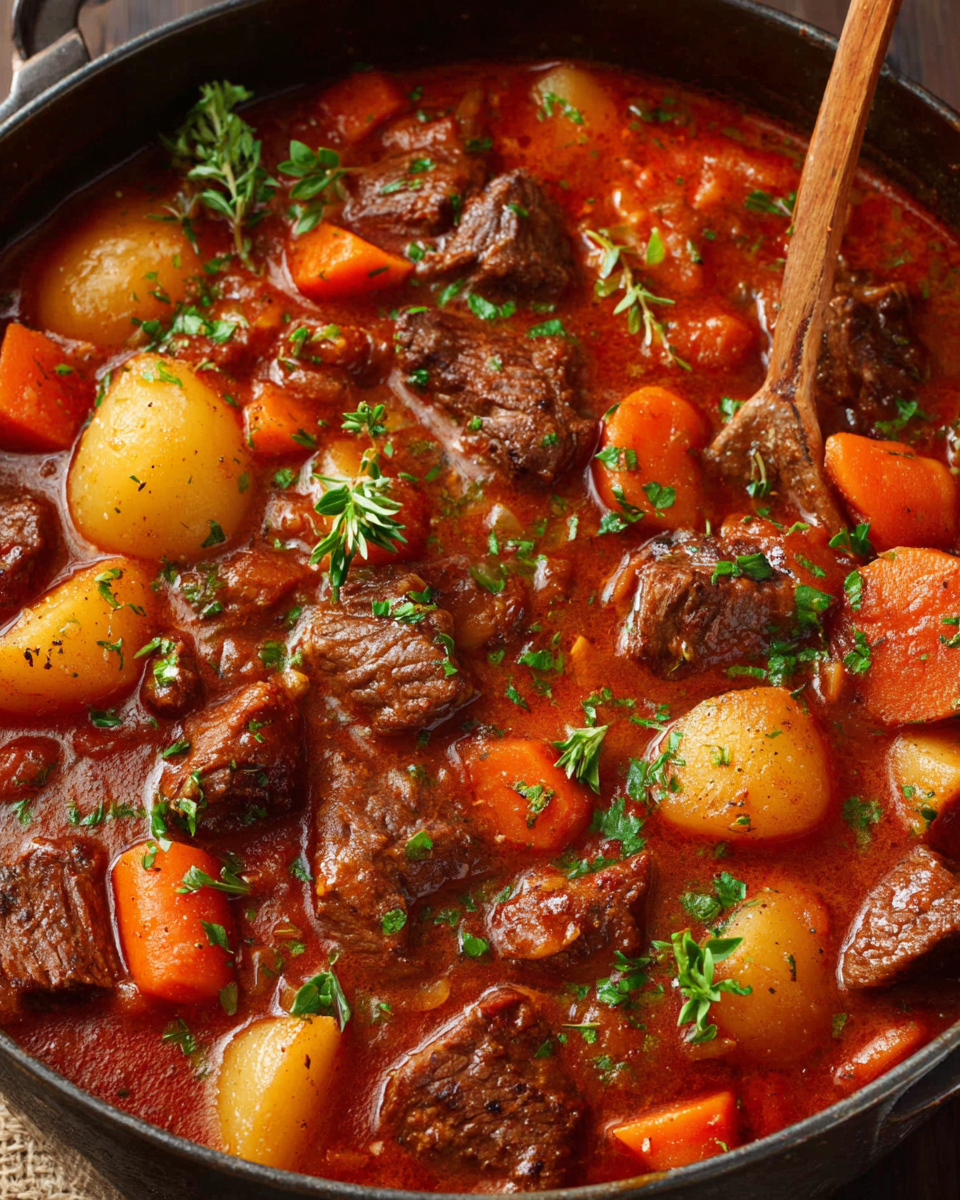
Comforting Traditional Beef Stew Recipe for Home Cooks
Ingredients
Method
- Heat the vegetable oil in a large pot over medium-high heat.
- Add the beef chuck to the pot in a single layer and brown it on all sides.
- Remove the browned beef and set it aside on a plate.
- In the same pot, add the chopped onion and cook until softened, about 5 minutes.
- Stir in the minced garlic and cook for an additional minute, until fragrant.
- Return the browned beef to the pot and add the beef broth, carrots, celery, potatoes, thyme, and bay leaf.
- Bring the mixture to a boil, then reduce heat to low and cover the pot.
- Simmer for 1.5 to 2 hours, stirring occasionally, until the beef is tender.
- Remove the bay leaf and adjust seasoning with salt and pepper to taste.
- Serve hot with crusty bread or over rice for a comforting meal.
Notes
Additional serving suggestions: pair with a crisp salad, garlic bread, or roasted seasonal vegetables for balance.
For make-ahead, prep components separately and assemble just before heating to preserve texture.
Taste and adjust with acid (lemon/vinegar) and salt right at the end to wake up flavors.