Introduction
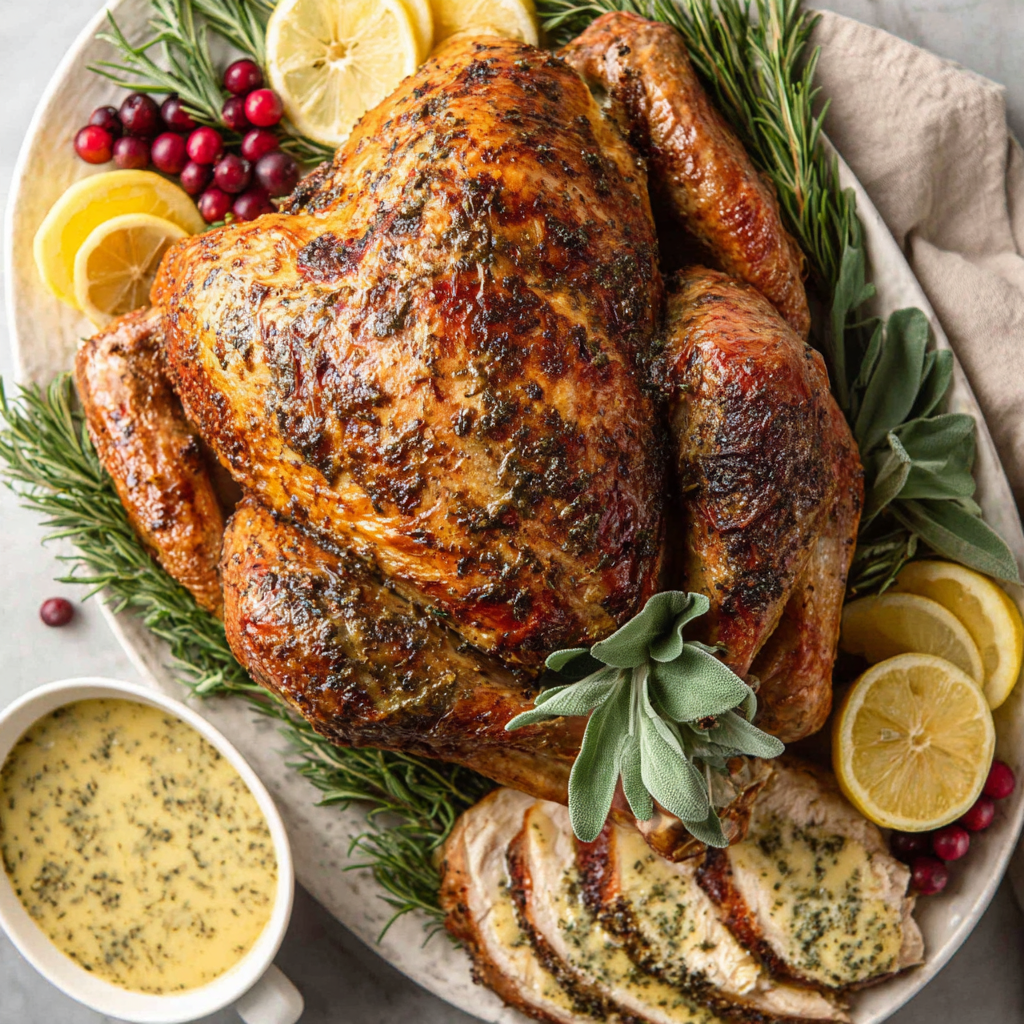
The centerpiece of many Christmas feasts, a classic roast turkey embodies the spirit of the season, bringing family and friends together around the table. This dish, with its golden brown skin and succulent meat, is the epitome of holiday comfort food. What makes this turkey extra special is the herb butter that infuses every bite with rich flavors, complemented by a savory homemade gravy.
Roasting a turkey may seem daunting, but with a few thoughtful techniques and care, anyone can achieve a spectacular result. By allowing the turkey to rest, using a flavorful herb butter, and preparing a richly textured gravy, you will create a feast that not only tastes wonderful but also looks stunning. Let’s dive into making this classic Christmas roast turkey that will be remembered long after the leftovers are gone.
Ingredients
- 1 (14-16 pound) turkey
The star of the show; it provides the main meat that's both tender and juicy when cooked properly. - 1 cup unsalted butter, softened
Brings richness to the dish and allows the herbs to adhere to the turkey, enhancing flavor and moisture. - 2 tablespoons salt
Essential for seasoning both the outside and inside of the turkey, ensuring every bite is flavorful. - 1 tablespoon black pepper
Adds a subtle heat that balances the butter and herbs. - 2 tablespoons fresh sage, chopped
Provides a traditional aroma and taste that pairs beautifully with turkey. - 2 tablespoons fresh thyme, chopped
Contributes earthy flavors that complement the rich turkey meat. - 2 tablespoons fresh rosemary, chopped
Adds a hint of piney freshness, elevating the overall flavor profile. - 1 onion, quartered
Aromatic and adds moisture to the turkey during roasting, contributing to the flavor of the gravy. - 4 cups turkey or chicken broth
Forms the base of the gravy and helps keep the turkey moist during cooking. - 2 tablespoons all-purpose flour
Thickens the gravy to give it a desirable consistency.
Directions & Preparation
Step 1: Thaw the turkey if frozen, ideally in the refrigerator for at least 24 hours per 4-5 pounds.
Thawing the turkey properly ensures even cooking and safety. A frozen turkey can lead to uneven roasting and longer cook times, resulting in dry meat in some areas. The refrigerator method is the safest way to thaw while preserving moisture and flavor.
Step 2: Preheat the oven to 325°F (165°C).
A consistent oven temperature is crucial for even roasting. Preheating ensures that the turkey begins cooking immediately upon entering the oven, resulting in a golden-brown skin and tender meat.
Step 3: Prepare the herb butter by mixing softened butter with chopped herbs, salt, and pepper.
This step is key as it creates a flavorful compound butter that will baste the turkey as it roasts. The herbs in the butter penetrate the skin, infusing the meat with their essence, ensuring a deliciously seasoned and moist turkey.
Step 4: Loosen the skin on the turkey breast and thighs carefully without tearing it.
Loosening the skin allows you to spread the herb butter directly onto the meat, ensuring maximum flavor. This technique also helps in achieving a crispy skin while retaining moisture inside the turkey.
Step 5: Rub the herb butter under the skin and all over the outside of the turkey.
Applying the butter both under the skin and on the outer surface helps create a beautifully golden, crispy skin while keeping the meat juicy and flavorful. Don’t forget to also season the cavity with salt and pepper for additional depth.
Step 6: Stuff the cavity of the turkey with quartered onion.
Stuffing the cavity adds moisture during cooking as the onion steams and caramelizes, enhancing the natural flavors of the turkey. It also prevents the cavity from drying out, resulting in juicy meat.
Step 7: Place the turkey in a roasting pan and tent it loosely with foil.
Tent the turkey with foil to shield it from direct heat and prevent over-browning while allowing the meat to cook through. The foil can be removed in the last hour of roasting for a perfect, golden finish.
Step 8: Roast the turkey according to its weight, approximately 13-15 minutes per pound.
Following the cooking time guideline ensures an evenly cooked turkey. However, using a meat thermometer to check internal temperature (165°F in the thickest part) is the best way to avoid overcooking, ensuring moist meat.
Step 9: Remove the turkey from the oven and let it rest for at least 30 minutes before carving.
Resting allows the juices to redistribute throughout the meat, making it tender and juicy when you carve it. Cutting immediately can lead to a dry turkey, as the juices will flow out instead of remaining inside.
Step 10: While the turkey rests, prepare the gravy with drippings.
Using the pan drippings to make the gravy infuses it with rich flavor from the roasted turkey. Combining drippings with flour and broth creates a silky gravy that is the perfect accompaniment to the turkey.
Step 11: Serve the turkey with homemade gravy and enjoy.
Serving the turkey with gravy not only enhances flavor but also adds moisture to the meat. This classic pairing brings a comforting holiday feel to the meal and is a guaranteed hit among family and friends.

The Importance of Herb Butter in Roast Turkey
Herb butter is the unsung hero of roast turkey, transforming an otherwise simple dish into an explosion of flavor. As the butter melts during roasting, it seeps into the meat, infusing each bite with aromatic herbs and a rich, creamy texture. This not only enhances the taste but also contributes to the turkey's moistness, providing a delightful contrast to the crispy skin.
Crafting the Perfect Gravy
No roast turkey is complete without a robust gravy made from its drippings. This simple yet delicious sauce captures the essence of the roasted turkey, turning the drippings into a savory accompaniment. By adding flour and broth, you can create a velvety gravy that pairs perfectly with sliced turkey, elevating the dining experience to festive heights.
Resting the Turkey: The Key to Tender Meat
Allowing the turkey to rest after roasting is an essential step for achieving juicy meat. As the turkey sits, the fibers relax and the juices redistribute, preventing them from escaping when carved. This results in a more flavorful and moist dish, ensuring that every slice is as enjoyable as the last and leaving your guests coming back for seconds.
FAQs
What if my turkey is still frozen after the thawing period?
If the turkey is still frozen, continue to thaw it in cold water, changing the water every 30 minutes until fully thawed. Avoid leaving it out at room temperature.
How can I know if the turkey is cooked through?
Use a meat thermometer to check the internal temperature; it should reach 165°F (74°C) in the thickest part of the breast and thigh.
Can I make gravy without drippings?
Yes, you can use store-bought broth as a base, adding herbs and seasonings for additional flavor, though it may lack the depth of flavor from drippings.
What if my gravy turns out too thick?
If your gravy is too thick, simply whisk in more broth or water gradually until the desired consistency is reached.
Can I use dried herbs instead of fresh ones?
Yes, you can substitute dried herbs, but use about one-third of the amount since they are more concentrated in flavor.
What if I want to scale the recipe for a smaller turkey?
You can reduce the quantities of butter and herbs proportionally based on the weight of a smaller turkey, adjusting cooking times accordingly.
Conclusion
Roasting a classic Christmas turkey is a rewarding endeavor that brings joy to the holiday season. With thoughtful preparation and attention to detail, you can create a centerpiece that honors tradition and delights your family.
This recipe for roast turkey with herb butter and gravy is not just about the meal; it's about coming together, sharing stories, and creating memories that will last well beyond the holiday season.
Recipe Card
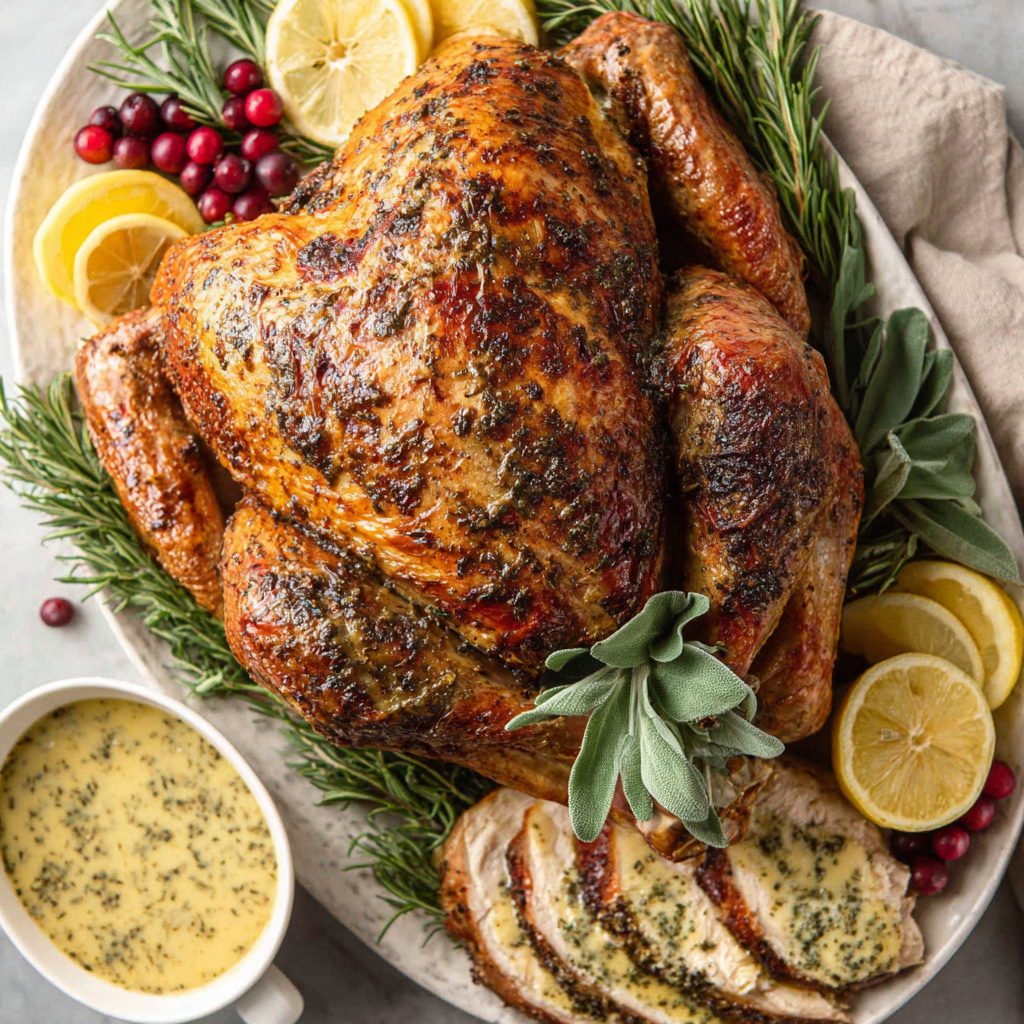
Classic Christmas Roast Turkey with Herb Butter and Gravy
Ingredients
Method
- Thaw the turkey if frozen, ideally in the refrigerator for at least 24 hours per 4-5 pounds.
- Preheat the oven to 325°F (165°C).
- Prepare the herb butter by mixing softened butter with chopped herbs, salt, and pepper.
- Loosen the skin on the turkey breast and thighs carefully without tearing it.
- Rub the herb butter under the skin and all over the outside of the turkey.
- Stuff the cavity of the turkey with quartered onion.
- Place the turkey in a roasting pan and tent it loosely with foil.
- Roast the turkey according to its weight, approximately 13-15 minutes per pound.
- Remove the turkey from the oven and let it rest for at least 30 minutes before carving.
- While the turkey rests, prepare the gravy with drippings.
- Serve the turkey with homemade gravy and enjoy.
Notes
Additional serving suggestions: pair with a crisp salad, garlic bread, or roasted seasonal vegetables for balance.
For make-ahead, prep components separately and assemble just before heating to preserve texture.
Taste and adjust with acid (lemon/vinegar) and salt right at the end to wake up flavors.