Introduction
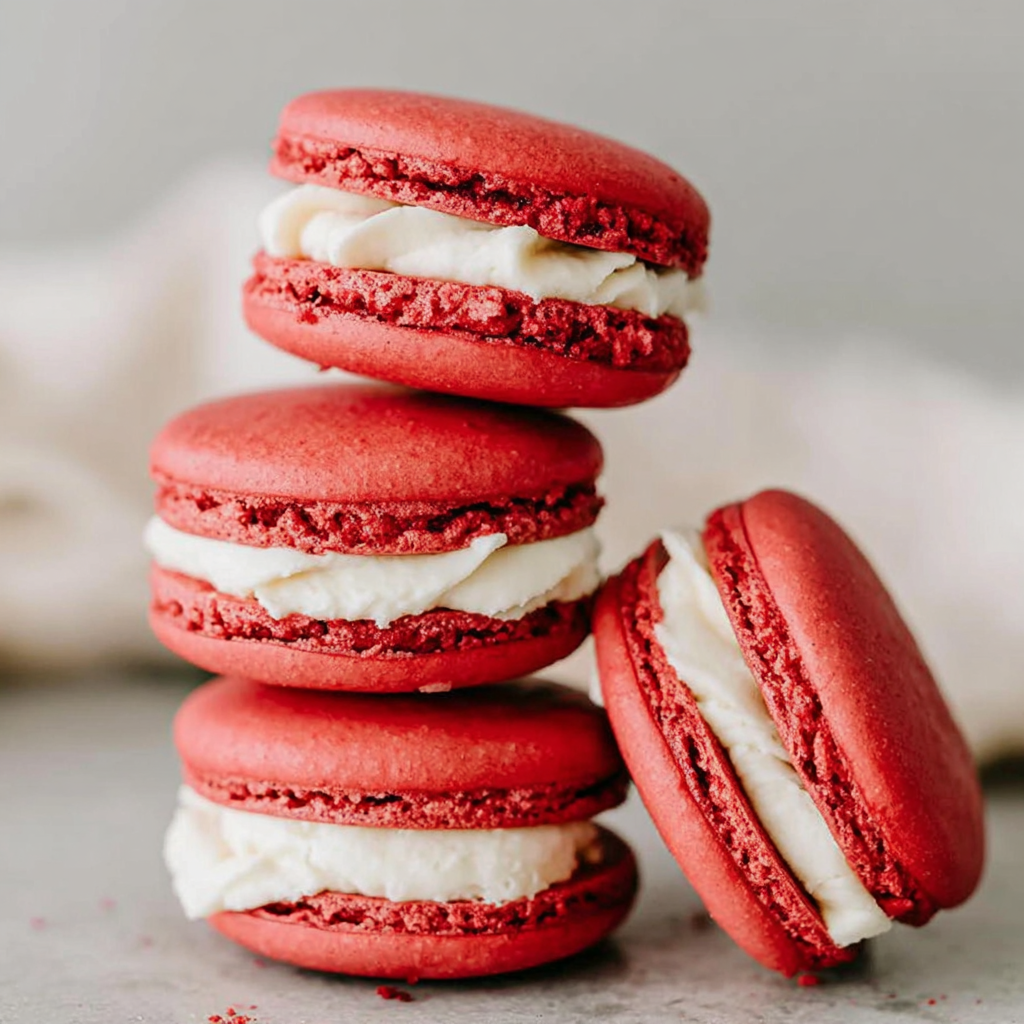
Macarons are delicate French cookies that captivate with their light, airy texture and vibrant colors, making them a perfect treat for any occasion. When you elevate these beauties with the rich notes of red velvet and a tangy cream cheese frosting, you create an indulgent dessert that’s not only pleasing to the eye but also a delight to the palate.
The charming contrast of the crisp shells and the creamy filling will have your guests or family reaching for seconds. With some practice and attention to detail, you’ll master these delightful confections that scream celebration and sophistication.
Ingredients
- 120g almond flour
Almond flour provides that signature chewy texture for macarons, contributing to a tender bite. It also adds a subtle nuttiness that complements the sweetness of the overall flavor. - 200g powdered sugar
Powdered sugar integrates with the almond flour to create a smooth texture in the macaron shells. It sweetens the cookies without altering their delicate structure, ensuring they balance the flavors of the filling. - 90g egg whites (about 3 large eggs), at room temperature
Egg whites are crucial for the meringue base that creates macarons. They help achieve stability and volume, creating that airy structure characteristic of perfect macarons. - 35g granulated sugar
Granulated sugar is mixed in with the egg whites to create a stable meringue. This allows for the formation of stiff peaks, which helps the macarons hold their shape during baking. - 1 tsp vanilla extract
Vanilla extract enhances the overall flavor profile, adding depth and warmth to the macarons. It's an essential component that balances the sweetness of the sugar. - 2 tbsp cocoa powder
Cocoa powder is what gives these macarons their striking red velvet color and hints of chocolate flavor. It adds complexity, making each bite richer. - Red gel food coloring
Food coloring is used to achieve the iconic deep red hue associated with red velvet desserts. A gel-based color is recommended because it won’t alter the macaron's consistency. - 100g cream cheese, softened
Cream cheese serves as the base for the frosting, providing a rich, tangy flavor that perfectly complements the sweetness of the macaron shells. - 50g unsalted butter, softened
Unsalted butter adds creaminess and smoothness to the frosting, helping it to achieve the right consistency to spread easily but still hold up between the macaron shells. - 200g powdered sugar, sifted
Powdered sugar sweetens the cream cheese frosting while also ensuring a smooth texture. Sifting helps eliminate clumps, resulting in a silky finish. - 1 tsp vanilla extract
Similar to the macaron shells, vanilla in the frosting rounds out the flavor, enriching the overall experience with a hint of aromatic sweetness.
Directions & Preparation
Step 1: Prepare the macaron batter
In a large bowl, combine the almond flour and powdered sugar, mixing well to eliminate lumps. This is a crucial step; a fine mixture ensures smoother macaron shells. Sifting is often recommended to further refine the powdery mix, which simplifies the macaron-making process.
Step 2: Make the meringue
In a separate bowl, whisk the egg whites until foamy. Gradually add granulated sugar while beating until stiff peaks form. This step is vital for a successful macaron, as stable meringue holds air, resulting in light shells. Be sure to test peaks with a spoon; if they stand tall and firm, you’re good to go.
Step 3: Combine and fold ingredients
Carefully fold the dry ingredients into the meringue using a spatula. The key here is to be gentle but effective; over-mixing can deflate the meringue, while under-mixing results in a grainy texture. Look for a consistency that flows like lava and forms a figure-eight when lifted.
Step 4: Color the batter
Add red gel food coloring to the batter and gently fold until evenly colored. This adds not just color but personality to your macarons. The right hue can be achieved by gradually incorporating small amounts of coloring until the desired shade is reached.
Step 5: Pipe the macaron shells
Fill a piping bag with the macaron batter and pipe rounds onto parchment-lined baking sheets. Leave space between each shell, as they will spread slightly. Proper piping technique ensures uniformity and aesthetic appeal, so practice makes perfect here—consistent size leads to even baking.
Step 6: Let the shells rest
Allow the piped macarons to sit at room temperature for 30-60 minutes until a skin forms on top. This resting period is crucial; it forms a protective layer that helps achieve the characteristic 'foot' of the macaron during baking. Touch them lightly; if they feel dry, it's time to bake.
Step 7: Bake the macarons
Preheat the oven to 300°F (150°C) and bake the macarons for 15-20 minutes. Keep an eye on them as every oven varies. Bake until the feet are well-formed and the tops are set, but don’t open the oven door too early or they might collapse.
Step 8: Cool the shells
Once baked, allow the macarons to cool completely on the baking sheets before removing them. This step is essential as it allows them to firm up and makes transferring them easier without breakage. Patience is key here; they will especially be tender when hot.
Step 9: Prepare the cream cheese frosting
In a medium bowl, beat together the softened cream cheese and unsalted butter until smooth and creamy. This blending creates the base for your frosting and ensures that there are no lumps left, helping it blend effortlessly with the powdered sugar and vanilla.
Step 10: Finish the frosting
Gradually add sifted powdered sugar and vanilla extract to the mixture, incorporating until well-combined. This results in a texture that’s both spreadable and rich. Adjust the sweetness by adding more powdered sugar if desired, and ensure it complements rather than overpowers the macaron’s flavor.
Step 11: Assemble the macarons
Pair macarons of similar sizes and pipe a dollop of cream cheese frosting onto the flat side of one. Gently press the other shell on top to create a sandwich. This is an enjoyable step; it allows for creativity in both presentation and flavor balance, so be gentle yet deliberate.
Step 12: Let the assembled macarons mature
Refrigerate the macarons for 24 hours to let the flavors meld and the texture improve. This maturing process enhances the taste, allowing the frosting to seep slightly into the shell, making them incredibly delicious. It’s worth the wait for immense flavor payoff.

Achieving the Perfect Macaron Shells
Creating the iconic macaron shell comes down to achieving the right consistency in the batter and mastering the folding technique. The aim is a smooth batter that holds its shape but also flows easily when piped. The resting period before baking allows for the necessary outer skin to form, which is crucial for that characteristic foot and texture. Take your time with each step for the best results!
Flavor Variations for Cream Cheese Frosting
While classic cream cheese frosting perfectly complements red velvet, consider experimenting with flavors to add a twist. For a citrusy kick, incorporate a bit of lemon zest or orange juice; alternatively, a hint of cinnamon or nutmeg can inject warmth. Remember to adjust sweetness accordingly to maintain the balance of flavors, enhancing the overall enjoyment of each bite.
Presentation Tips for Red Velvet Macarons
The visual appeal of macarons is vital to their charm, so consider arrangements that elevate their presentation. Utilize decorative boxes or tiered platters to showcase your macarons, and maybe sprinkle some edible glitter for a festive touch. A simple garnish of crushed almonds or mini chocolate chips can elevate the aesthetics and provide additional texture when served.
FAQs
Why did my macaron shells crack during baking?
Cracking often indicates that the shells were either overmixed or the oven temperature was too high. Ensure to fold the batter just until incorporated and use an oven thermometer to check the actual temperature.
What if my macaron batter is too runny?
If your batter is too runny, it may be an indication of over-mixing. Carefully recheck your folding technique, and if necessary, you might add a bit more almond flour to achieve the desired consistency.
Can I substitute the almond flour with another type of flour?
Almond flour is a unique ingredient that gives macarons their signature texture. Substituting with regular flour will result in poor texture and yield. Stick with almond flour for the best results.
What should I do if my cream cheese frosting is too thick?
If your frosting is too thick, you can thin it out by adding a teaspoon of milk or cream while mixing. This will help achieve a smooth, spreadable consistency without compromising flavor.
Can I use different flavors of frosting for these macarons?
Absolutely! These macarons can be filled with various flavors of frosting or ganache. Experimenting with flavors like chocolate, raspberry, or even coffee can create exciting and unique variations.
What if my macarons do not have a foot?
A lack of foot indicates that the shells did not develop correctly during baking. This can result from a number of factors including insufficient resting time, peaking on the meringue, or too high of an oven temperature. Make sure to follow the cues during preparation.
Conclusion
Red velvet macarons filled with cream cheese frosting are a sophisticated dessert that will impress anyone. While they may seem intimidating at first, following the essential steps and practicing technique will lead to fruitful results.
With each attempt, you’ll discover new nuances in flavor and texture, and soon enough, these delightful treats will become a loved staple in your recipe repertoire. Enjoy crafting these delightful confections for any occasion!
Recipe Card
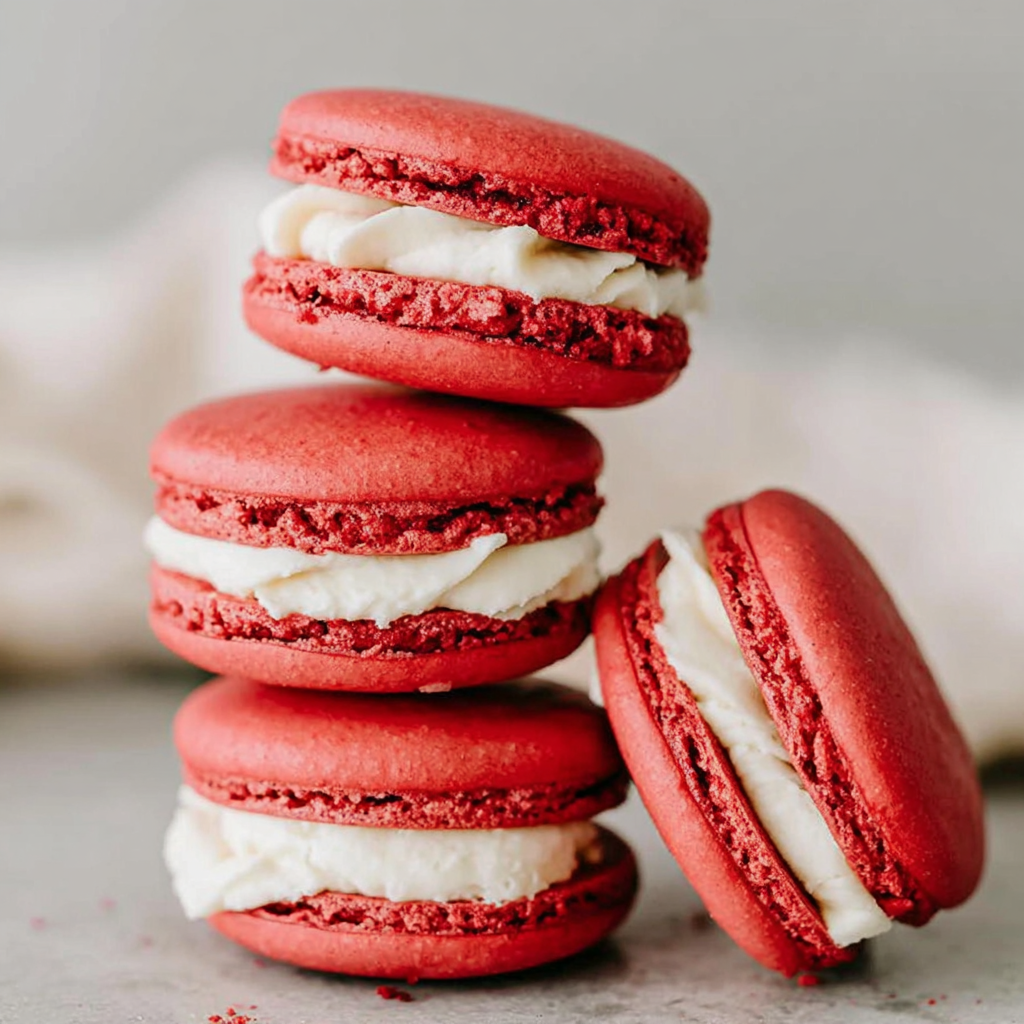
Decadent Red Velvet Macarons with Cream Cheese Frosting
Ingredients
Method
- Prepare the macaron batter
- Make the meringue
- Combine and fold ingredients
- Color the batter
- Pipe the macaron shells
- Let the shells rest
- Bake the macarons
- Cool the shells
- Prepare the cream cheese frosting
- Finish the frosting
- Assemble the macarons
- Let the assembled macarons mature
Notes
Additional serving suggestions: pair with a crisp salad, garlic bread, or roasted seasonal vegetables for balance.
For make-ahead, prep components separately and assemble just before heating to preserve texture.
Taste and adjust with acid (lemon/vinegar) and salt right at the end to wake up flavors.