Introduction
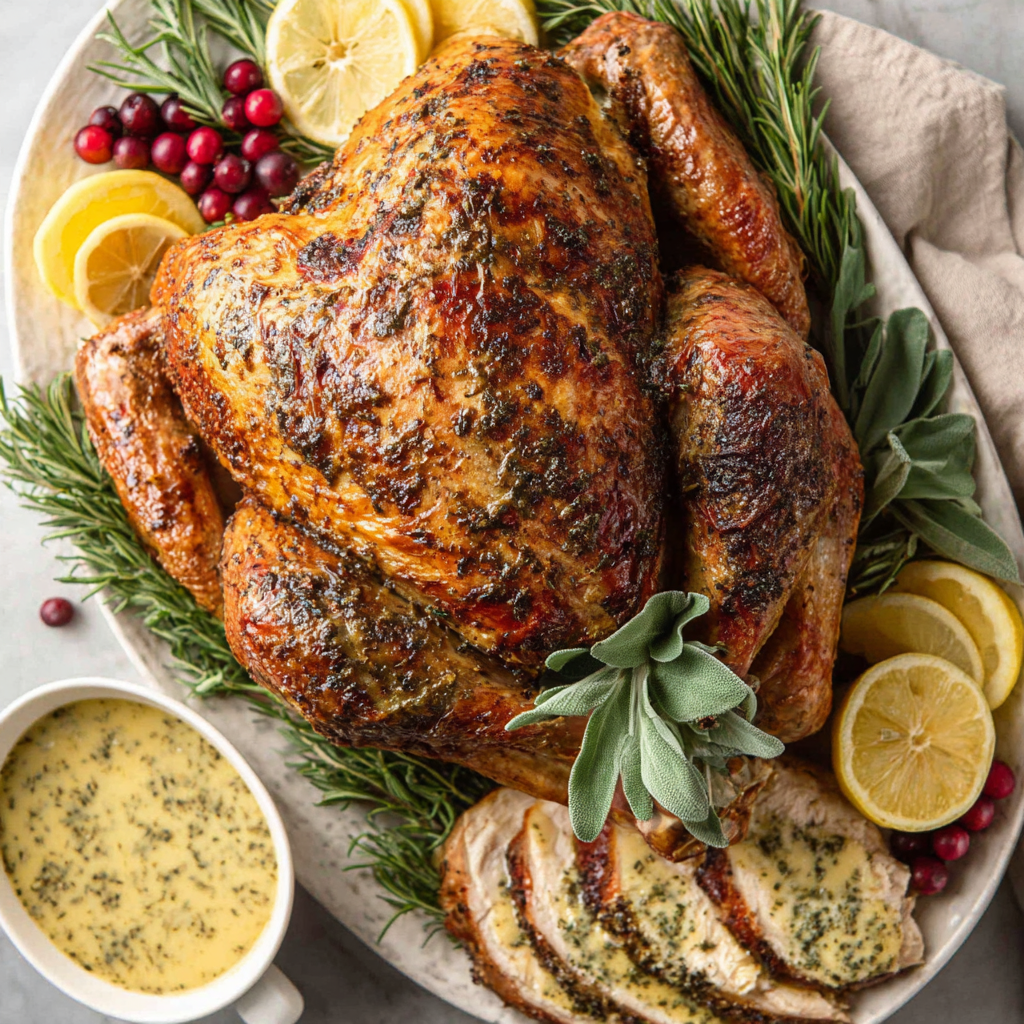
The centerpiece of many holiday feasts is the roast turkey, a tradition steeped in lore and flavor. With its golden-brown skin and succulent meat, it provides warmth and festivity to any dinner table. Preparing a roast turkey can be both an art and a science, and with the right approach, it can become the star of your Christmas celebration.
Using herb-infused butter elevates the turkey, imparting depth and richness while ensuring moisture throughout the cooking process. Coupled with a flavorful gravy made from drippings, this classic roast turkey recipe will make your festive gathering memorable.
Ingredients
- 1 (12-14 lb) whole turkey
A whole turkey serves as the main event, providing a large serving for family and friends. Choosing a fresh or quality frozen turkey ensures the best flavor and texture. - 1 cup unsalted butter, softened
Butter adds richness and moisture to the turkey, helping to achieve a beautifully browned and crispy skin when evenly applied. - 1/4 cup fresh sage, chopped
Sage is a classic herb that pairs wonderfully with turkey, imparting an earthy aroma and flavor that enhances the meat's natural taste. - 1/4 cup fresh thyme, chopped
Thyme complements the sage and adds depth to the herb butter, creating a well-rounded flavor profile that elevates the turkey. - 1/4 cup fresh rosemary, chopped
Rosemary provides a fragrant and pine-like flavor, adding complexity to the dish. It works harmoniously with the other herbs for a festive touch. - 4 cloves garlic, minced
Garlic brings a rich, savory element to the herb butter. It deepens the flavor and aroma, making each bite even more irresistible. - 2 teaspoons salt
Salt is essential for seasoning the turkey, ensuring that the meat is flavorful throughout. It also helps with moisture retention during roasting. - 1 teaspoon black pepper
Freshly ground black pepper adds a hint of spice, balancing the flavors of the butter and herbs. - 4 cups chicken or turkey broth
Broth is key for making the gravy. It adds flavor and richness and can help deglaze the pan, capturing the delicious bits left from roasting. - 2 tablespoons all-purpose flour
Flour serves as a thickening agent for the gravy, giving it a rich texture while binding the flavors from the drippings and broth.
Directions & Preparation
Step 1: Preheat the oven to 325°F (163°C).
Preheating ensures an even cooking temperature from the start, which is essential for achieving that perfectly roasted turkey. A consistent temperature allows for even cooking and helps achieve the desired crispiness of the skin.
Step 2: Prepare the herb butter by mixing softened butter with chopped sage, thyme, rosemary, garlic, salt, and pepper.
Combining these ingredients creates a flavorful paste that will not only season the turkey well but also contribute to its moistness. Ensuring the butter is softened allows for even mixing and easier application under the turkey's skin.
Step 3: Remove the turkey from its packaging and pat it dry with paper towels.
Drying the turkey skin is crucial for a crispy finish. Moisture on the surface will steam the skin instead of roasting it, leading to a less appealing texture.
Step 4: Gently separate the skin from the turkey breast and thighs using your fingers.
Creating space between the skin and meat allows you to apply the herb butter directly onto the meat, ensuring the flavors penetrate deeply while keeping the skin crisp during roasting.
Step 5: Generously spread the herb butter under the skin and all over the outside of the turkey.
Coating the turkey in herb butter not only flavors the meat but also creates a barrier that traps moisture, helping to prevent dryness during cooking. This is where the turkey develops its delectable crust.
Step 6: Season the cavity of the turkey with salt and pepper, and add aromatics like onion or lemon if desired.
Seasoning the cavity allows for internal seasoning, while adding aromatics brightens the overall flavor and can infuse the meat from within as it cooks.
Step 7: Place the turkey on a rack in a roasting pan and tuck the wing tips under the body.
Using a rack helps to elevate the turkey, promoting even cooking all around. Tucking the wings prevents them from burning and encourages a beautiful shape during roasting.
Step 8: Roast the turkey in the preheated oven, basting occasionally with pan drippings.
Basting helps to keep the turkey moist and adds flavor from the drippings, which is critical for achieving that beautiful golden brown color on the skin. It's recommended to baste every 30-45 minutes.
Step 9: Check the internal temperature using a meat thermometer, aiming for 165°F (74°C) in the breast and thighs.
Cooking to the right internal temperature ensures the turkey is safe to eat while preventing overcooking. A thermometer helps you avoid guessing, which is key for juicy meat.
Step 10: Once done, remove the turkey from the oven and let it rest for at least 30 minutes before carving.
Resting allows the juices to redistribute within the meat, making each slice tender and juicy. This step is often overlooked but is vital for full flavor and optimal texture.
Step 11: Make the gravy by whisking flour into the pan drippings and adding broth over medium heat.
Creating a roux with the drippings thickens the gravy while introducing robust flavors from the turkey. Adding broth gradually ensures a smooth consistency, free of lumps.
Step 12: Serve the turkey with the gravy on the side.
Presenting the turkey on a platter with gravy allows guests to control their preferred amount on each serving. This enhances the dining experience, making it festive and accommodating.

The Importance of Herb Butter
Herb butter is more than just a flavorful addition; it serves as the secret to succulent turkey. By introducing the butter beneath the skin, it melts during cooking, keeping the meat moist while flavoring it from within. The combination of herbs also adds natural aromatic qualities that fill your kitchen with the essence of the holidays, making the cooking process enjoyable.
Mastering Turkey Gravy
Gravy can elevate your turkey experience, transforming simple drippings into a rich, flavorful sauce. Ensuring you capture every bit of flavor from the roasting pan and properly bulking it with broth allows for depth. The right amount of seasoning, texture, and thickness is essential. Utilizing a whisk while cooking helps to combine flavors effectively, leading to a smooth, luscious gravy.
Resting Your Roast Turkey
The period after roasting is crucial for maximizing flavor and moisture content. Allowing the turkey to rest gives time for the juices to redistribute throughout the meat. This means that when you carve into your turkey, you won't lose any of that hard-earned moisture. Even a few extra moments can significantly enhance the overall texture and satisfaction of each delicious bite.
FAQs
What can I do if my turkey is overcooked?
If the turkey is overcooked, serve with plenty of gravy for moisture and try to slice it thinly to improve texture. Adding broth can also help revive the meat.
How can I adjust the recipe for a smaller turkey?
To adjust for a smaller turkey, scale down the amount of herb butter and seasonings. A general rule is 1 cup of butter and ¼ cup of herbs for every 12-14 pounds of turkey.
Can I add other vegetables for roasting?
Yes, adding root vegetables like carrots, potatoes, or onions around the turkey can enhance flavor. They soak up drippings and add complexity to the meal.
What should I do if my gravy is too thin?
If the gravy is too thin, mix a small amount of flour or cornstarch with cold water to form a slurry and stir it into the gravy. Heat until thickened.
Can I use dry herbs instead of fresh in the butter mixture?
Yes, though dried herbs can be more potent, reducing the quantity to about one-third will help maintain balance in flavor.
Should I brine the turkey before roasting?
Brining can enhance moisture and flavor significantly. If you choose to brine, adjust the salt in the herb butter to avoid oversalting.
Conclusion
Crafting a classic Christmas roast turkey with herb butter and gravy is a labor of love that rewards with unforgettable flavors and cherished memories. With patience and the right technique, you can create a dish that will have your guests asking for seconds.
Remember that the magic lies not just in the ingredients but also in the love and care you put into the preparation. Each roast turkey becomes a symbol of togetherness during the holiday season, making every gathering special.
Recipe Card
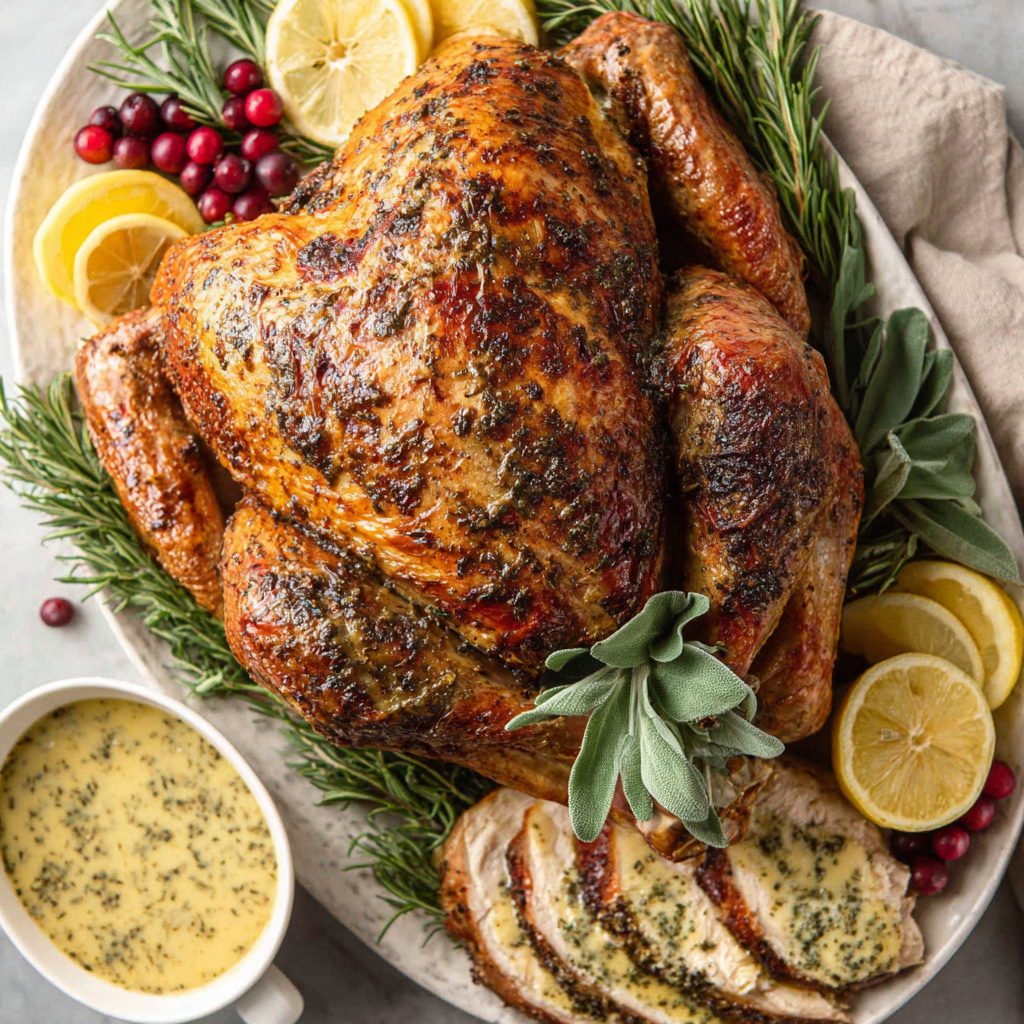
Classic Christmas Roast Turkey with Herb Butter and Gravy
Ingredients
Method
- Thaw the turkey if frozen, ideally in the refrigerator for at least 24 hours per 4-5 pounds.
- Preheat the oven to 325°F (165°C).
- Prepare the herb butter by mixing softened butter with chopped herbs, salt, and pepper.
- Loosen the skin on the turkey breast and thighs carefully without tearing it.
- Rub the herb butter under the skin and all over the outside of the turkey.
- Stuff the cavity of the turkey with quartered onion.
- Place the turkey in a roasting pan and tent it loosely with foil.
- Roast the turkey according to its weight, approximately 13-15 minutes per pound.
- Remove the turkey from the oven and let it rest for at least 30 minutes before carving.
- While the turkey rests, prepare the gravy with drippings.
- Serve the turkey with homemade gravy and enjoy.
Notes
Additional serving suggestions: pair with a crisp salad, garlic bread, or roasted seasonal vegetables for balance.
For make-ahead, prep components separately and assemble just before heating to preserve texture.
Taste and adjust with acid (lemon/vinegar) and salt right at the end to wake up flavors.