Introduction
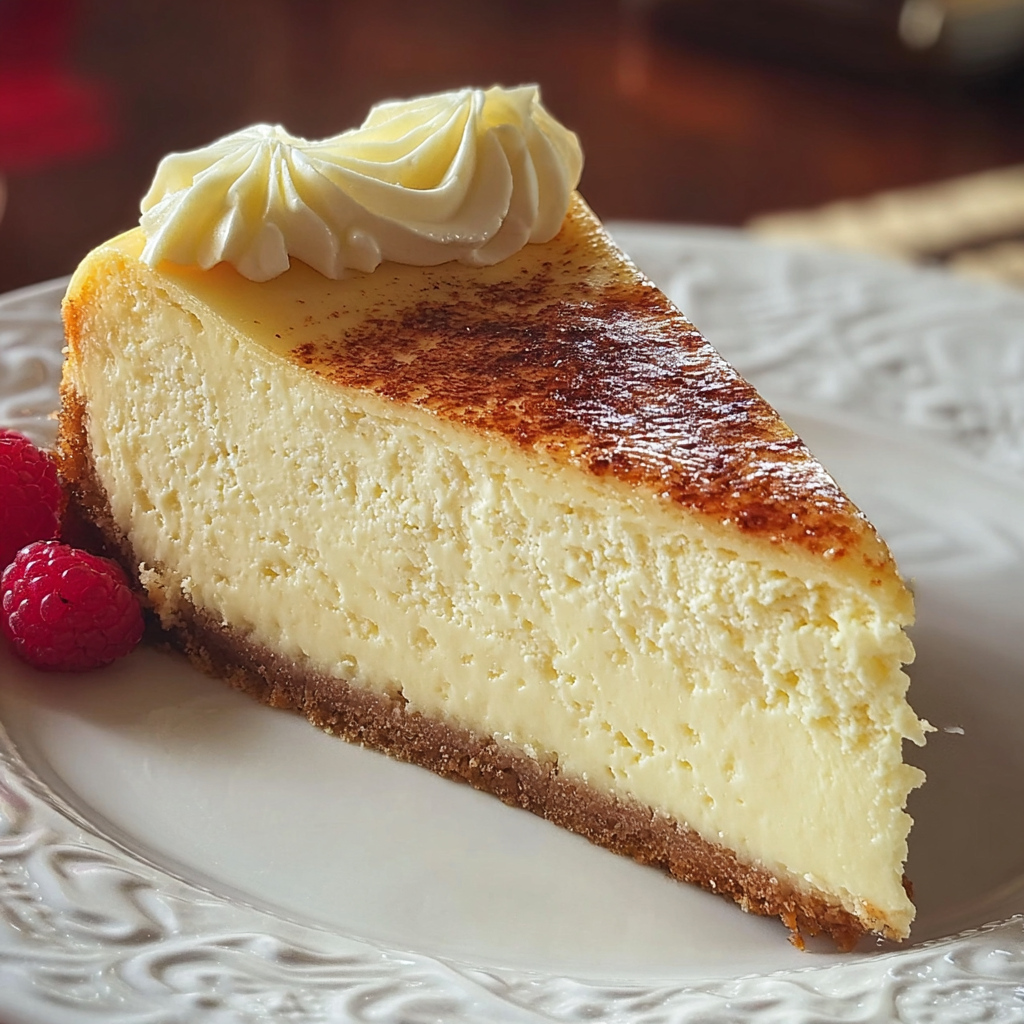
There's something timeless about a classic New York-style cheesecake. Rich, creamy, and impeccably dense, it captures the essence of indulgence, making it a favorite for many. When well-executed, this dessert has a velvety texture and a balanced sweetness that leaves a lasting impression.
Cooking at home allows for personal creativity, and a cheesecake is no exception. This recipe serves as a canvas upon which you can express your taste while adhering to tradition. With a simple ingredient list, the beauty lies in the quality and the technique employed in the making.
Ingredients
- 2 cups graham cracker crumbs
Graham cracker crumbs form the crust, providing a sweet and slightly crunchy base that complements the creamy filling. Their flavor brings a hint of nostalgia that's quintessential in cheesecake. - 1/2 cup unsalted butter, melted
Butter helps to bind the crumbs together and adds richness to the crust. Using unsalted butter allows for better control of the overall saltiness of the cheesecake. - 4 packages (8 oz each) cream cheese, softened
Cream cheese is the star of the show, giving the cheesecake its luxurious texture and tangy flavor. Ensuring it's softened allows for a smoother mixture, preventing lumps. - 1 cup granulated sugar
Sugar sweetens the filling, enhancing the natural flavors of the cream cheese while contributing to the creamy texture. It also helps to balance the tanginess of the cream cheese. - 1 teaspoon vanilla extract
Vanilla extract adds depth and aromatics to the cheesecake, enhancing its overall flavor profile. Opt for pure vanilla for the best results. - 4 large eggs
Eggs act as a binding agent that provides structure to the cheesecake. They also contribute to the overall creaminess, while ensuring the cheesecake sets properly. - 1 teaspoon lemon juice
Lemon juice introduces a refreshing acidity that balances the richness of the cheesecake. It enhances the flavor without overpowering the dish.
Directions & Preparation
Step 1: Preheat the oven to 325°F (163°C).
Properly preheating the oven is crucial for achieving an even bake. Cheesecakes benefit from a consistent temperature, which helps prevent cracks and ensures a smooth texture.
Step 2: Combine the graham cracker crumbs and melted butter in a bowl.
Mixing the crumbs with melted butter creates a cohesive mixture that holds together when pressed into the pan. Ensure it's evenly combined for a uniform texture throughout the crust.
Step 3: Press the mixture into the bottom of a 9-inch springform pan.
Pressing the crust firmly into the bottom of the pan establishes a solid foundation for the cheesecake. Aim for an even layer, as any gaps could lead to uneven baking.
Step 4: In a separate bowl, mix the softened cream cheese and sugar until smooth.
A smooth cream cheese mixture is vital for a creamy cheesecake. Beats the sugar into the cream cheese thoroughly to eliminate lumps, which can affect the texture of the final product.
Step 5: Add the vanilla extract and lemon juice, mixing until incorporated.
These ingredients elevate the flavor of the cheesecake. The acid from the lemon juice balances the richness, while vanilla adds warmth.
Step 6: Add the eggs, one at a time, ensuring each is fully incorporated before adding the next.
Incorporating the eggs one at a time allows for better emulsification, resulting in a smoother consistency. Overbeating can introduce air into the mixture, leading to cracks during baking.
Step 7: Pour the filling into the prepared crust and smooth the top.
Smoothing the surface of the filling prevents any unattractive peaks after baking and allows for even cooking. Ensuring the filling is level helps it to bake uniformly.
Step 8: Bake for 50-60 minutes, until the edges are set and the center is slightly jiggly.
The key to a perfect cheesecake is baking it until just set. Overbaking can lead to cracks as it cools, while a slightly jiggly center indicates a creamy texture once cooled.
Step 9: Turn off the oven and leave the cheesecake inside with the door ajar for 1 hour.
This technique helps to gently cool the cheesecake, reducing the chances of cracks caused by sudden temperature changes. It allows the cheesecake to adjust to cooler temperatures.
Step 10: Remove from the oven and cool completely before refrigerating.
Allowing the cheesecake to cool thoroughly before refrigerating not only improves its texture but also enhances the flavors as they meld together during chilling.
Step 11: Refrigerate for at least 4 hours, preferably overnight, before serving.
Chilling overnight allows the cheesecake to firm up, improving its texture and flavor profile. A well-chilled cheesecake is easier to slice and enjoy.

Understanding Cheesecake Texture
Achieving the ideal cheesecake texture requires careful mixing and baking. Overmixing can introduce air bubbles, leading to cracks. Conversely, undermixing can leave lumps, creating an uneven mouthfeel. Maintaining a balance is essential for the dense and creamy texture that defines classic New York-style cheesecake.
The Importance of Temperature
All ingredients should be at room temperature before mixing, particularly the cream cheese and eggs. This results in a smoother batter that fills the pan evenly and sets perfectly. Additionally, allowing the cheesecake to cool gradually in the oven prevents unwanted cracks resulting from abrupt temperature shifts.
Serving Suggestions and Variations
A classic cheesecake can be enjoyed plain, but feel free to adorn it with your favorite toppings—berries, caramel, or a simple fruit coulis. Each option adds an exciting layer of flavor, allowing for endless personalization. Alternatively, consider folding in a tablespoon of cocoa powder for a chocolate twist.
FAQs
What should I do if my cheesecake is too dense?
If your cheesecake turns out too dense, ensure you've thoroughly mixed your filling without overbeating, as excessive air can cause unexpected results. Also, check that you’ve added the right amount of eggs for proper structure.
How can I tell if my cheesecake is properly baked?
A properly baked cheesecake should have set edges while the center remains slightly jiggly. It will firm up as it cools, so don’t worry if it appears soft coming out of the oven.
What can I do if the top of my cheesecake cracks?
Cracks often occur due to temperature changes during baking. To minimize this, bake at a consistent temperature and consider using a water bath to regulate the heat distribution.
Can I make a crustless version?
Yes, you can make a crustless cheesecake by omitting the graham cracker crust. Just ensure to grease your springform pan well to prevent sticking.
What's the best way to slice cheesecake cleanly?
To slice cheesecake neatly, use a warm, sharp knife. Wipe the blade with a damp cloth between cuts to maintain clean edges.
Can I incorporate flavored extracts or spices into the filling?
Absolutely! Feel free to enhance your cheesecake with other flavorings like almond extract or spices such as nutmeg or cinnamon for a unique twist.
Conclusion
Crafting a classic New York-style cheesecake is an art form that marries simplicity with indulgence. The recipe's balance of rich flavors and textures makes it an enchanting dessert to serve on any occasion.
With care and attention to detail, you can master this timeless dessert. Don't be afraid to infuse your personal touch, and remember: real perfection lies not only in the taste but in the joy of sharing with others.
Recipe Card
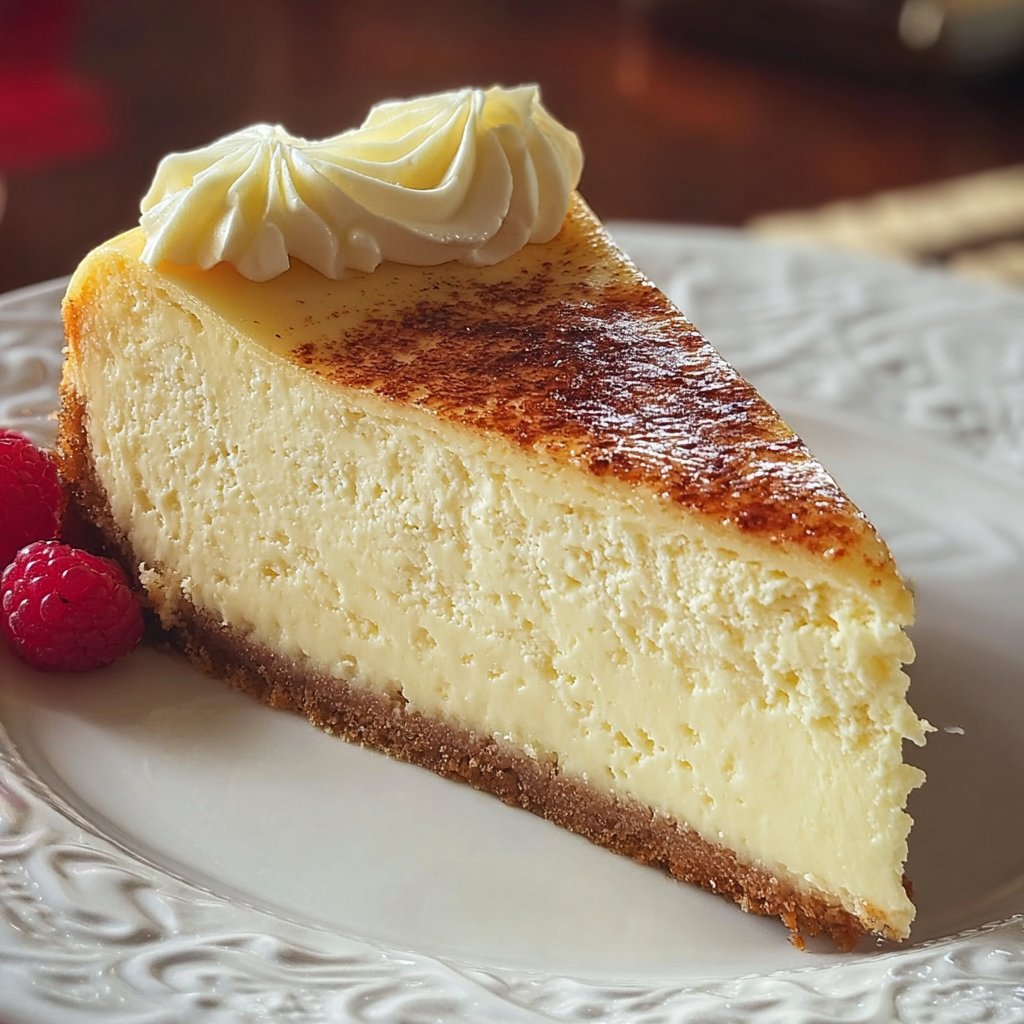
Perfecting the Classic New York-Style Cheesecake
Ingredients
Method
- Preheat the oven to 325°F (163°C).
- Combine the graham cracker crumbs and melted butter in a bowl.
- Press the mixture into the bottom of a 9-inch springform pan.
- In a separate bowl, mix the softened cream cheese and sugar until smooth.
- Add the vanilla extract and lemon juice, mixing until incorporated.
- Add the eggs, one at a time, ensuring each is fully incorporated before adding the next.
- Pour the filling into the prepared crust and smooth the top.
- Bake for 50-60 minutes, until the edges are set and the center is slightly jiggly.
- Turn off the oven and leave the cheesecake inside with the door ajar for 1 hour.
- Remove from the oven and cool completely before refrigerating.
- Refrigerate for at least 4 hours, preferably overnight, before serving.
Notes
Additional serving suggestions: pair with a crisp salad, garlic bread, or roasted seasonal vegetables for balance.
For make-ahead, prep components separately and assemble just before heating to preserve texture.
Taste and adjust with acid (lemon/vinegar) and salt right at the end to wake up flavors.