Introduction
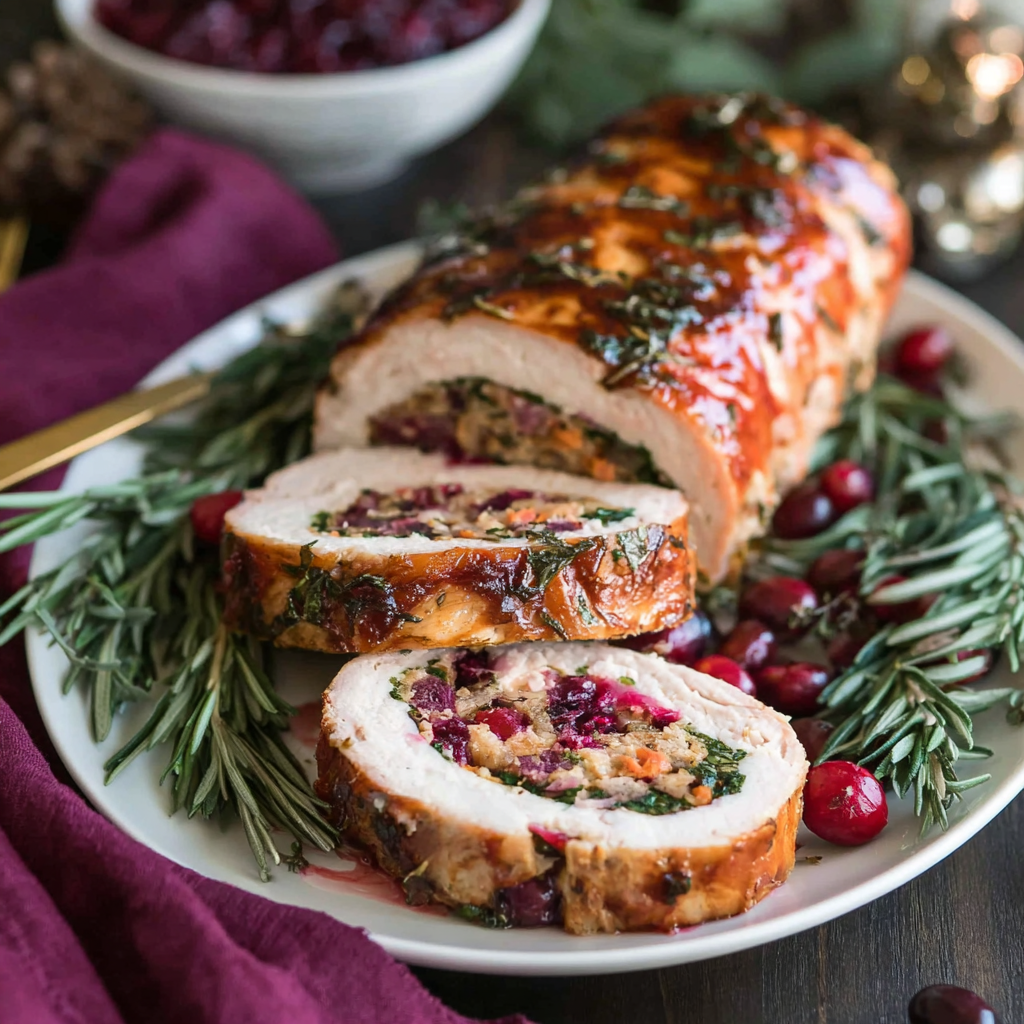
Turkey roulade presents a delightful twist on the traditional Thanksgiving centerpiece. Crafted with care, this dish combines the rich flavors of turkey with a vibrant stuffing that sings of the season.
The magic lies in rolling the turkey breast around a delectable mixture of cranberry and sage, creating a presentation that is as impressive as it is delicious. Perfect for festive gatherings, this recipe will surely become a staple in your culinary repertoire.
Ingredients
- 1 boneless turkey breast (about 2-3 lbs)
The star of this dish, a boneless turkey breast, provides a lean and tender base ideal for rolling. Its mild flavor is enhanced by the stuffing, ensuring each bite is succulent. - 1 cup fresh cranberries
Cranberries add a tart and tangy element that brightens the rich flavors of the turkey. They offer a refreshing contrast, cutting through the meat's natural richness. - 1/2 cup bread crumbs
Bread crumbs help bind the stuffing ingredients together while ensuring it has the right texture. They absorb moisture, contributing to a unified filling. - 1 small onion, finely chopped
Onion adds depth and sweetness to the stuffing. Sautéing it enhances its flavor, which permeates the entire filling, creating a savory base. - 2 cloves garlic, minced
Garlic infuses the stuffing with a warm, aromatic flavor. Its pungency balances the sweetness of the cranberries and enriches the overall profile. - 2 tablespoons fresh sage, chopped
Sage brings an earthy note to the dish, complementing poultry beautifully. Its distinct aroma and flavor evoke comforting, home-cooked meals. - 1/4 cup chicken broth
Chicken broth keeps the stuffing moist while baking, preventing it from becoming dry. It enhances the flavor of the turkey and the filling alike. - Salt and pepper, to taste
Seasoning with salt and pepper is crucial to bringing out the flavors of all the ingredients. Proper seasoning ensures the dish is balanced and flavorful. - Olive oil, for sautéing
Olive oil is used for sautéing the onion and garlic, preventing them from sticking to the pan. It also adds a hint of richness to the stuffing. - Kitchen twine
Kitchen twine is essential for securing the roulade. It ensures that the filling stays intact while cooking, maintaining the roulade's shape.
Directions & Preparation
Step 1: Preheat your oven to 375°F (190°C).
Preheating the oven is crucial for ensuring that the turkey cooks evenly. A hot oven facilitates the roasting process, helping achieve a beautifully browned exterior.
Step 2: Prepare the stuffing by sautéing onion and garlic in olive oil until softened.
Sautéing the onion and garlic allows their flavors to develop, providing a robust base for the stuffing. This process releases their natural sugars, enhancing sweetness and depth.
Step 3: Add cranberries, bread crumbs, sage, and chicken broth to the sauté mixture.
Combining these ingredients ensures the stuffing is well-blended and flavorful. The bread crumbs absorb moisture from the broth, creating a cohesive mixture.
Step 4: Season the stuffing with salt and pepper, then set aside to cool slightly.
Taste-testing the stuffing for seasoning is vital. Adjusting with salt and pepper at this stage ensures that every bite is flavorful, balancing the tartness of the cranberries.
Step 5: Butterfly the turkey breast and pound it to an even thickness.
Butterflying and pounding the turkey breast allows for even cooking and helps it roll more easily around the stuffing. It also provides a larger surface area for filling.
Step 6: Spread the stuffing evenly over the turkey breast, leaving a border.
Ensuring an even layer of stuffing helps every slice of the roulade carry balanced flavors. The border allows for proper rolling and prevents spilling.
Step 7: Roll the turkey into a tight cylinder and secure with kitchen twine.
Rolling tightly ensures that the filling stays inside during cooking. Securing with twine creates uniform slices, allowing for better presentation when serving.
Step 8: Season the exterior of the roulade with salt and pepper, then place in a roasting pan.
Seasoning the outside of the roulade enhances its overall flavor profile. The roasting pan should catch any drippings for added sauce options or for basting.
Step 9: Roast the turkey roulade for about 1 hour or until the internal temperature reaches 165°F (74°C).
Correct cooking time is essential for food safety and texture. Monitoring the internal temperature ensures the turkey is thoroughly cooked without drying out.
Step 10: Let the roulade rest for 10-15 minutes before slicing.
Resting allows juices to redistribute throughout the meat, preventing dryness when sliced. This step is crucial for achieving succulent, flavorful servings.

Choosing the Right Turkey Breast
Opt for a fresh or high-quality frozen boneless turkey breast for best results. The meat's freshness impacts flavor and texture significantly. Always check for a plump, moist appearance, avoiding any that appear dried out.
Enhancing Flavor with Herbs and Spices
Experimenting with different herbs can elevate your turkey roulade to new heights. Consider adding thyme or rosemary alongside sage for a more complex flavor profile, or replace cranberries with apples for a sweeter alternative.
Serving Suggestions for Your Roulade
Complement your turkey roulade with sides that enhance its flavors. Mashed potatoes, roasted seasonal vegetables, or a simple salad can create a well-rounded meal, allowing the roulade to shine while adding variety.
FAQs
What if my stuffing is too dry?
If the stuffing seems dry after cooking, consider adding a splash of chicken broth before rolling, ensuring it retains moisture during roasting.
Can I use a different type of meat for the roulade?
Yes, pork or chicken can work well as alternatives. Adjust cooking times accordingly based on the type of meat used to ensure proper doneness.
What should I do if the roulade takes longer to cook?
If your roulade isn't reaching the appropriate temperature, cover it with foil to prevent the exterior from burning while the inside cooks through.
How can I make the stuffing more flavorful?
Incorporating sautéed mushrooms or adding nuts will introduce more depth. You can also increase the seasoning or add spices to enhance the overall flavor.
Can I use dried cranberries instead of fresh?
Yes, dried cranberries can be used as a substitute, but you may want to reduce the quantity slightly, as they are sweeter and more concentrated.
What is the best way to slice the roulade after it rests?
Use a sharp serrated knife to slice the roulade, ensuring even cuts that display the stuffing beautifully. Cut gently to avoid pulling apart the layers.
Conclusion
This turkey roulade with cranberry-sage stuffing transforms a traditional recipe into an appealing centerpiece that's perfect for any festive occasion. The combination of flavors creates a unique dish that reflects the essence of the season.
With just a few thoughtful steps, you can create an elegant meal that's sure to impress your guests. Embrace the art of roulade-making and enjoy a holiday meal that embodies warmth and celebration.
Recipe Card
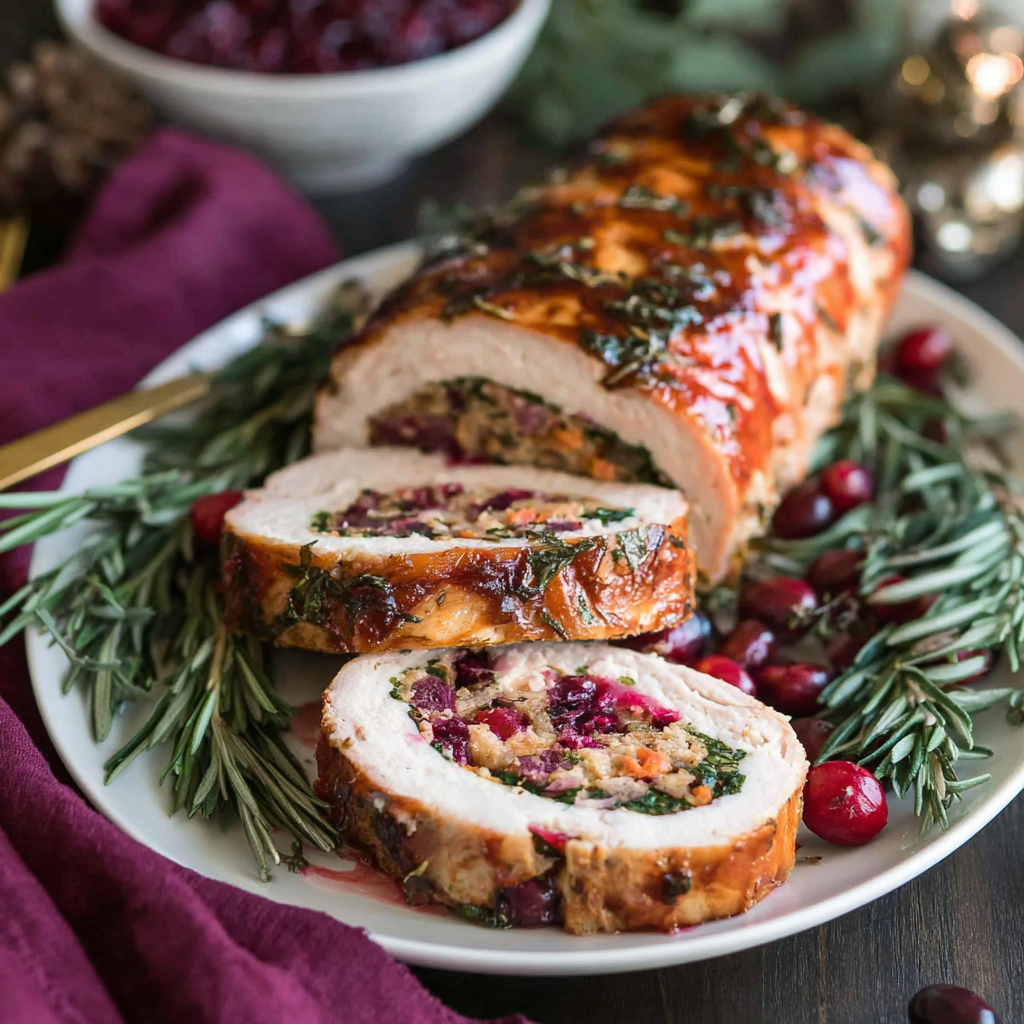
Savory Turkey Roulade with Cranberry-Sage Filling
Ingredients
Method
- Preheat your oven to 375°F (190°C).
- Prepare the stuffing by sautéing onion and garlic in olive oil until softened.
- Add cranberries, bread crumbs, sage, and chicken broth to the sauté mixture.
- Season the stuffing with salt and pepper, then set aside to cool slightly.
- Butterfly the turkey breast and pound it to an even thickness.
- Spread the stuffing evenly over the turkey breast, leaving a border.
- Roll the turkey into a tight cylinder and secure with kitchen twine.
- Season the exterior of the roulade with salt and pepper, then place in a roasting pan.
- Roast the turkey roulade for about 1 hour or until the internal temperature reaches 165°F (74°C).
- Let the roulade rest for 10-15 minutes before slicing.
Notes
Additional serving suggestions: pair with a crisp salad, garlic bread, or roasted seasonal vegetables for balance.
For make-ahead, prep components separately and assemble just before heating to preserve texture.
Taste and adjust with acid (lemon/vinegar) and salt right at the end to wake up flavors.