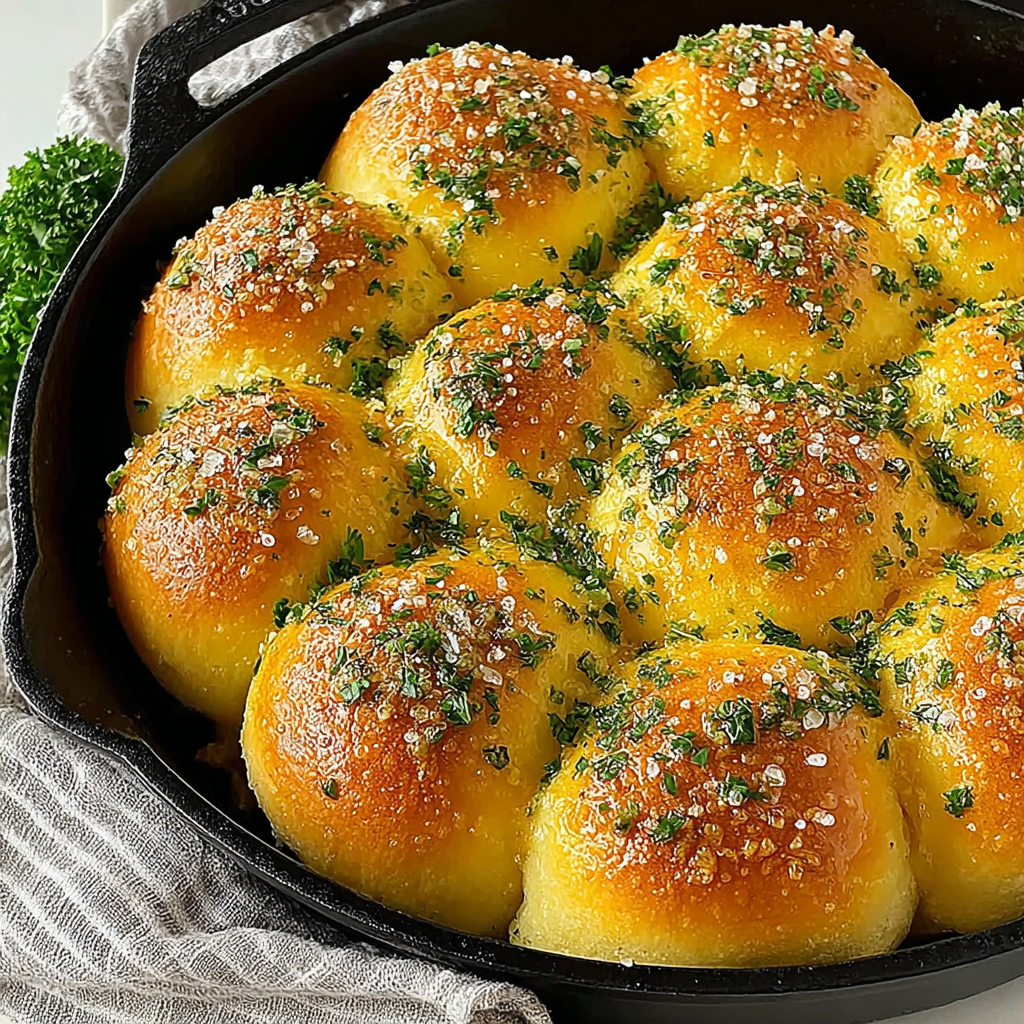
Introduction
There’s something incredibly satisfying about freshly baked bread, especially when it comes in the form of soft dinner rolls. Using a cast iron skillet adds a unique charm, providing even heat distribution for a perfectly golden finish and a crisp crust. These rolls can transform any ordinary meal into a special occasion.
Whether you’re planning a family dinner or a festive gathering, these cast iron skillet dinner rolls are a must-try. With minimal ingredients and straightforward techniques, you'll soon find that making rolls from scratch is not only rewarding but also an enjoyable experience in the kitchen.
Ingredients
- 4 cups all-purpose flour
All-purpose flour acts as the main structure of the rolls, providing the necessary gluten that gives bread its chewy texture. The right amount of flour is crucial for achieving the perfect consistency, so measuring it accurately is important. - 2 tablespoons sugar
Sugar is not only a sweetener but also aids in activating the yeast, which helps the dough rise. It adds a touch of sweetness that balances the savory elements of the rolls, enhancing their overall flavor. - 2 teaspoons instant yeast
Instant yeast is quick-acting and helps the dough rise promptly. It allows for a shorter proofing time, making the process more efficient, while also ensuring that the rolls have a light, airy texture. - 1 teaspoon salt
Salt is essential for flavoring the dough and controlling the fermentation process. It strengthens the gluten structure while enhancing the taste, making every bite of the rolls more satisfying. - 1 cup warm milk
Warm milk not only hydrates the dough but also activates the yeast when combined. It contributes to the softness of the rolls, resulting in a tender and fluffy texture. - 1/2 cup unsalted butter, melted
Melted butter imbues the rolls with a rich flavor and contributes to their moistness. It also helps in creating a tender crumb, ensuring that each roll is melt-in-your-mouth delicious. - 2 large eggs
Eggs serve multiple purposes in bread making. They add richness, act as a binding agent, and improve the structure and stability of the rolls, resulting in a consistent texture throughout.
Directions & Preparation
Step 1: Combine the dry ingredients in a mixing bowl.
In a large mixing bowl, whisk together the flour, sugar, instant yeast, and salt until evenly distributed. This ensures that the yeast and salt are properly incorporated, which is vital for even fermentation and flavor development in the dough.
Step 2: Warm the milk and mix with wet ingredients.
Gently heat the milk until it’s warm but not boiling. Once warm, combine the milk with the melted butter and beaten eggs, stirring them together. This step is important because warm milk activates the yeast while the butter adds richness to the dough.
Step 3: Combine wet and dry ingredients.
Pour the milk mixture into the bowl with your dry ingredients, mixing until a shaggy dough forms. You can use a wooden spoon or your hands for this process, but be careful not to overmix as it can develop the gluten too much before proofing.
Step 4: Knead the dough until smooth.
Transfer the dough onto a floured surface and knead it for about 8-10 minutes until it’s smooth and elastic. Kneading is essential as it develops the gluten network, which ensures that the rolls have the right texture and rise well during baking.
Step 5: Let the dough rise.
Place the kneaded dough in a lightly greased bowl, cover with a damp cloth, and allow it to rise in a warm place until doubled in size, about 1-2 hours. This step is crucial for achieving the dough's fluffy texture and 'ear' that characterizes well-made rolls.
Step 6: Shape the rolls and prepare the skillet.
Once the dough has risen, punch it down gently to release the gases and divide it into equal portions. Shape each portion into a roll and place them in a greased cast iron skillet. Proper shaping helps ensure even rising and a uniform final product.
Step 7: Second rise.
Cover the shaped rolls with a kitchen towel and let them rise again until they have doubled, about 30 minutes. This is often referred to as the second proof, and it's vital for creating soft, airy rolls that will be perfect once baked.
Step 8: Preheat the oven.
Preheat your oven to 375°F (190°C) while the rolls are rising. Preheating ensures that your rolls go directly into a properly heated oven, which helps them rise initially for a beautiful, light texture.
Step 9: Bake the rolls.
Once preheated, bake the rolls for 20-25 minutes or until they are golden brown on top. Baking time may vary based on your oven, but a golden crust indicates that they’re ready. Keep an eye on them towards the end to avoid overbrowning.
Step 10: Cool and serve.
Remove the skillet from the oven and allow the rolls to cool for a few minutes. Serve warm, perhaps with a bit of butter, allowing everyone to enjoy the fruits of your labor and the comforting aroma that fills your kitchen.

The Importance of Patience in Proofing
Proofing is a vital step in yeast bread making that requires patience. Rushing this process can lead to dense and heavy rolls, losing the lightness that makes them so desirable. Allowing the dough to rise adequately ensures that carbon dioxide produces the airy structure we crave in dinner rolls, enhancing their texture and taste.
Why a Cast Iron Skillet is Ideal
Using a cast iron skillet allows for even heat distribution, creating a beautifully browned crust that is hard to replicate with other bakeware. The skillet's weight retains heat effectively, ensuring that the dough rises uniformly and achieves that coveted crispy exterior, while the inside remains tender and fluffy.
Tailoring Recipes to Your Taste
Feel free to experiment with flavors by adding herbs, cheese, or spices to the dough. This recipe serves as a wonderful base for variations, allowing you to tailor it to your taste preferences or the theme of your meal. Adding garlic powder for garlic rolls or cheese for savory bites enhances their versatility and appeal.
FAQs
What if my dough is too dry?
If your dough feels too dry while kneading, add a tiny bit of warm milk, one tablespoon at a time, until it reaches the right consistency. This will help improve the moisture level without compromising the end result.
What if the rolls turn out too dense?
Dense rolls can indicate that the dough did not proof long enough or was overworked during kneading. Make sure to allow adequate time for rising and handle the dough gently to retain air pockets.
Can I halve the recipe successfully?
Yes, you can absolutely halve the recipe. Just ensure to remember the same rising and baking times, as they may vary slightly due to the reduced quantity.
How can I tell when the rolls are baked through?
You can check for doneness by tapping the bottom of one roll; it should sound hollow. Additionally, the tops should be golden brown and have risen beautifully.
What can I add to enhance the flavor?
Consider adding a teaspoon of garlic powder, dried herbs, or even cheese into the dough for a flavorful twist. These add-ins can change the profile of your rolls significantly while keeping the base recipe intact.
Why are my rolls not browning properly?
If your rolls aren't browning as expected, it could be due to low oven temperature or inadequate sugar in the dough. Ensure your oven is properly preheated, and consider trying more sugar for a better caramelization.
Can I use bread flour instead of all-purpose flour?
Yes, bread flour can be used in this recipe, but it may yield slightly denser rolls as it has a higher protein content. Just be sure to monitor the hydration levels if you make this substitution.
Conclusion
Baking cast iron skillet dinner rolls at home can open a new world of flavor and texture that store-bought options simply can't compete with. The warmth and aroma of freshly baked bread are things to cherish, perfectly complementing any meal.
With just a few basic ingredients and a cast iron skillet, you can create rolls that will impress your family and guests alike. Embrace the rhythm of baking and relish the satisfaction of pulling perfectly risen, buttery rolls from your oven.
Recipe Card

Irresistibly Soft Cast Iron Skillet Dinner Rolls
Ingredients
Method
- Combine the dry ingredients in a mixing bowl.
- Warm the milk and mix with wet ingredients.
- Combine wet and dry ingredients.
- Knead the dough until smooth.
- Let the dough rise.
- Shape the rolls and prepare the skillet.
- Second rise.
- Preheat the oven.
- Bake the rolls.
- Cool and serve.
Notes
Additional serving suggestions: pair with a crisp salad, garlic bread, or roasted seasonal vegetables for balance.
For make-ahead, prep components separately and assemble just before heating to preserve texture.
Taste and adjust with acid (lemon/vinegar) and salt right at the end to wake up flavors.