Introduction
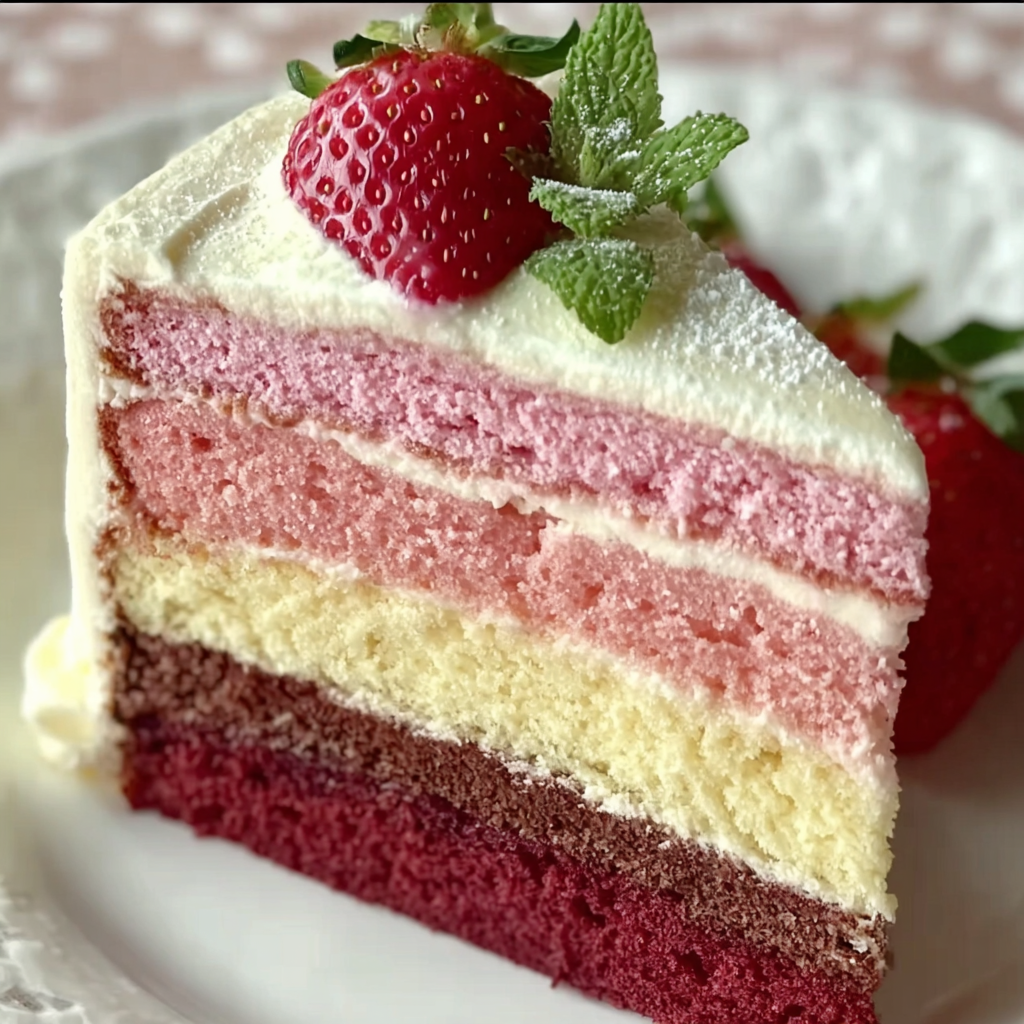
The Neapolitan layer cake is a delightful homage to the classic flavors of chocolate, vanilla, and strawberry. Each bite takes you on a nostalgic journey, combining rich cake layers with creamy frosting, offering a perfect treat for various occasions.
Whether you're celebrating a birthday or simply indulging on a weekend, this cake showcases your baking skills while pleasing your guests' palates. With its striking appearance and contrasting flavors, it promises to be the centerpiece of your dessert table.
Ingredients
- 2 cups all-purpose flour
The backbone of the cake, all-purpose flour provides structure and stability. Its protein content helps create a tender texture while ensuring the layers rise properly. - 1 ½ cups granulated sugar
This ingredient not only sweetens the cake but also contributes to its moisture and tender crumb. Sugar helps to activate the leavening agents, providing lift and a perfect texture. - 1 cup unsalted butter, softened
Butter lends richness and flavor. The creaming process integrates air into the batter, allowing the cake to rise beautifully, creating a light and fluffy texture. - 4 large eggs, at room temperature
Eggs offer moisture and act as a binding agent. Their proteins provide structure, while the fat from the yolk enhances flavor and contributes to a luscious cake. - 1 cup buttermilk, at room temperature
The acidity of buttermilk tenderizes gluten, resulting in a softer cake. It also adds a subtle tang that balances the sweetness, enriching the overall flavor profile. - 2 teaspoons baking powder
A key leavening agent, baking powder creates carbon dioxide bubbles that help the cake rise. It promotes a light and airy texture, vital for layer cakes. - 1 teaspoon baking soda
This ingredient works in tandem with buttermilk to produce additional leavening. It also enhances the cake's browning and promotes a moist texture. - 1 teaspoon vanilla extract
Vanilla is essential for flavor enhancement, providing warmth and depth to both the cake and frosting. A quality extract makes a noticeable difference. - 1 cup strawberry purée (fresh or frozen)
Strawberry purée adds vibrant flavor and moisture to the cake layers. It also imparts a beautiful hue, making the layers visually appealing. - 1 cup cocoa powder
Used for the chocolate layer, cocoa powder provides deep, rich flavor and color. It's essential for creating an authentic Neapolitan experience. - 3 cups powdered sugar
Powdered sugar is used to create the frosting, contributing sweetness and creaminess. Its fine texture helps achieve a smooth and spreadable consistency. - ½ cup whole milk, at room temperature
Milk is key for adjusting the frosting's texture and making it creamy. It helps balance the sweetness and ensures the frosting is easy to spread.
Directions & Preparation
Step 1: Preheat your oven to 350°F (175°C).
Starting with a properly preheated oven ensures that the cake layers bake evenly and rise correctly. An oven thermometer can help confirm the temperature for consistency.
Step 2: Grease and flour three 9-inch round cake pans.
Greasing and flouring the pans prevents the cakes from sticking. Ensure an even layer of flour to achieve clean edges when removing the cakes from the pans.
Step 3: In a mixing bowl, cream the softened butter and granulated sugar until light and fluffy.
This step integrates air into the butter, essential for a light cake. The mixture should turn pale and fluffy, indicating the sugar has dissolved and aeration has occurred.
Step 4: Add eggs one by one, mixing well after each addition, then incorporate the vanilla extract.
Incorporating eggs gradually allows for proper emulsification and ensures the batter maintains its air structure. The vanilla adds depth to the flavor profile.
Step 5: In a separate bowl, mix the flour, baking powder, baking soda, and salt.
Combining dry ingredients before adding them to the wet ensures even distribution of leavening agents. This step provides a uniform rise across all layers.
Step 6: Alternately add the dry ingredients and buttermilk to the creamed mixture, starting and ending with dry ingredients.
This method helps maintain the cake's structure while optimizing moisture. Be careful not to overmix, as this can lead to a dense cake.
Step 7: Divide the batter into three bowls, adding strawberry purée to one, cocoa powder to another, leaving the third vanilla-flavored.
This division allows you to create distinct flavors and colorful layers. Mix each batter until just combined to ensure each maintains its texture and taste.
Step 8: Pour each batter into the prepared pans and smooth the tops.
Ensure even distribution for consistent baking. Flattening the tops prevents doming, which can complicate layering and frosting.
Step 9: Bake for 25-30 minutes or until a toothpick inserted in the center comes out clean.
Monitoring baking time is crucial; overbaking can dry out the cake. Check for doneness around the 25-minute mark to avoid this.
Step 10: Allow the cakes to cool in the pans for 10 minutes, then turn them out onto wire racks to cool completely.
Cooling in the pans helps them set, preventing breakage. Transferring to wire racks ensures even cooling to avoid sogginess.
Step 11: Once cooled, prepare the frosting by creaming the butter and powdered sugar until smooth, then add milk to reach desired consistency.
Properly creamed butter is key to a fluffy frosting. Gradually adding milk adjusts the texture, ensuring it's spreadable but not runny.
Step 12: Layer the cakes: place a layer on a serving plate, spread frosting, and repeat with the other layers, finishing with frosting on top and sides.
Layering ensures a beautiful presentation and even frosting distribution enhances flavor and texture in each slice. Use an offset spatula for smooth application.
Step 13: Chill the assembled cake for about 30 minutes to set the frosting before serving.
Chilling helps stabilize the frosting, making it easier to slice. This step also allows the flavors to meld, enhancing the overall taste experience.

Layering Techniques for a Stunning Cake
The art of layering is essential for an impressive Neapolitan cake. Use a serrated knife to level each cake layer, ensuring an even surface. This will help the layers stack neatly and increases the appeal when served. Experiment with different frosting techniques by using a spatula or piping bag for added visual dimension. A flawless layer cake makes a striking presentation for any occasion.
Customizing Flavors for Unique Twists
Though the classic Neapolitan flavors shine, you can creatively adapt each layer. Consider infusing the vanilla layer with almond extract or adding espresso powder to the chocolate for depth. For seasonal variations, switch out strawberry for raspberry or lemon curd. These tweaks keep the tradition while introducing new taste profiles, ensuring your cake remains a delightful surprise.
Perfect Pairings: Sides and Beverages
The Neapolitan layer cake pairs wonderfully with various sides and beverages. Serve it alongside fresh fruit, like berries or a light salad with citrus dressing, to balance sweetness. Complement your cake with coffee or herbal tea for an elevated experience. These pairings enhance the cake's richness while providing a refreshing contrast, making for a balanced dessert spread.
FAQs
What if my cake layers come out too thick or thin?
Ensure your oven temperature is accurate, and measure your ingredients precisely. If layers are too thick, consider using larger pans or reducing the batter per pan. For thin layers, check your baking time and ensure you’re using the right amount of batter per pan.
How do I prevent the cake from being dry?
Monitor the baking time carefully and avoid overmixing the batter. Ensure the cakes cool properly without lingering too long in the oven, as this can lead to dryness.
What can I do if my frosting is too thick?
If the frosting is too thick, gradually add more milk, one teaspoon at a time, until you reach the desired consistency. Mix thoroughly between additions to achieve a smooth texture.
Can I use different fruits for the layers?
Absolutely! You can substitute strawberry purée with other fruits like mango or peach purée, but keep in mind the moisture content to maintain balance in each layer.
What should I do if my layers are domed after baking?
If layers are domed, let them cool completely, then use a serrated knife to level the tops. This will help create a stable base for frosting.
How can I enhance the chocolate flavor in the cake?
For a richer chocolate taste, consider adding a tablespoon of instant espresso powder to the cocoa powder or using dark cocoa powder for deeper flavor.
Conclusion
Creating a Neapolitan layer cake may seem intimidating, but with careful attention to each element, it becomes a rewarding experience. Once you slice into your cake, the beautiful layers and harmonious flavors will leave a lasting impression.
Share this special treat with friends and family, celebrating both the artistry and deliciousness that this classic cake embodies. Embrace the joy of baking, and indulge in each delightful slice!
Recipe Card

Cajun Seafood Alfredo with Lobster and Crab
Ingredients
Method
- Cook the fettuccine pasta according to package instructions until al dente, then drain and set aside.
- In a large skillet, heat olive oil over medium heat. Add the minced garlic and sauté for 1-2 minutes until fragrant.
- Stir in the Cajun seasoning, cooking for an additional minute to toast the spices slightly.
- Pour in the heavy cream, stirring well to combine. Allow to simmer for 4-5 minutes, thickening slightly.
- Add grated parmesan cheese gradually, stirring constantly until melted and incorporated into the sauce.
- Fold in the lobster and crab meat gently, cooking for another 2-3 minutes until heated through.
- Season with salt and black pepper to your taste, adjusting as needed based on your preferences.
- Add the cooked fettuccine to the skillet, tossing well to coat each strand in the Cajun seafood Alfredo sauce.
- Remove from heat, and let the dish sit for a minute before serving. Garnish with sliced green onions.
Notes
Additional serving suggestions: pair with a crisp salad, garlic bread, or roasted seasonal vegetables for balance.
For make-ahead, prep components separately and assemble just before heating to preserve texture.
Taste and adjust with acid (lemon/vinegar) and salt right at the end to wake up flavors.